Showing posts with label Sermon on the Mount. Show all posts

Wednesday, March 1, 2017

Crosses on Your Forehead

What do a cross of Chrism and one of ash have in common?
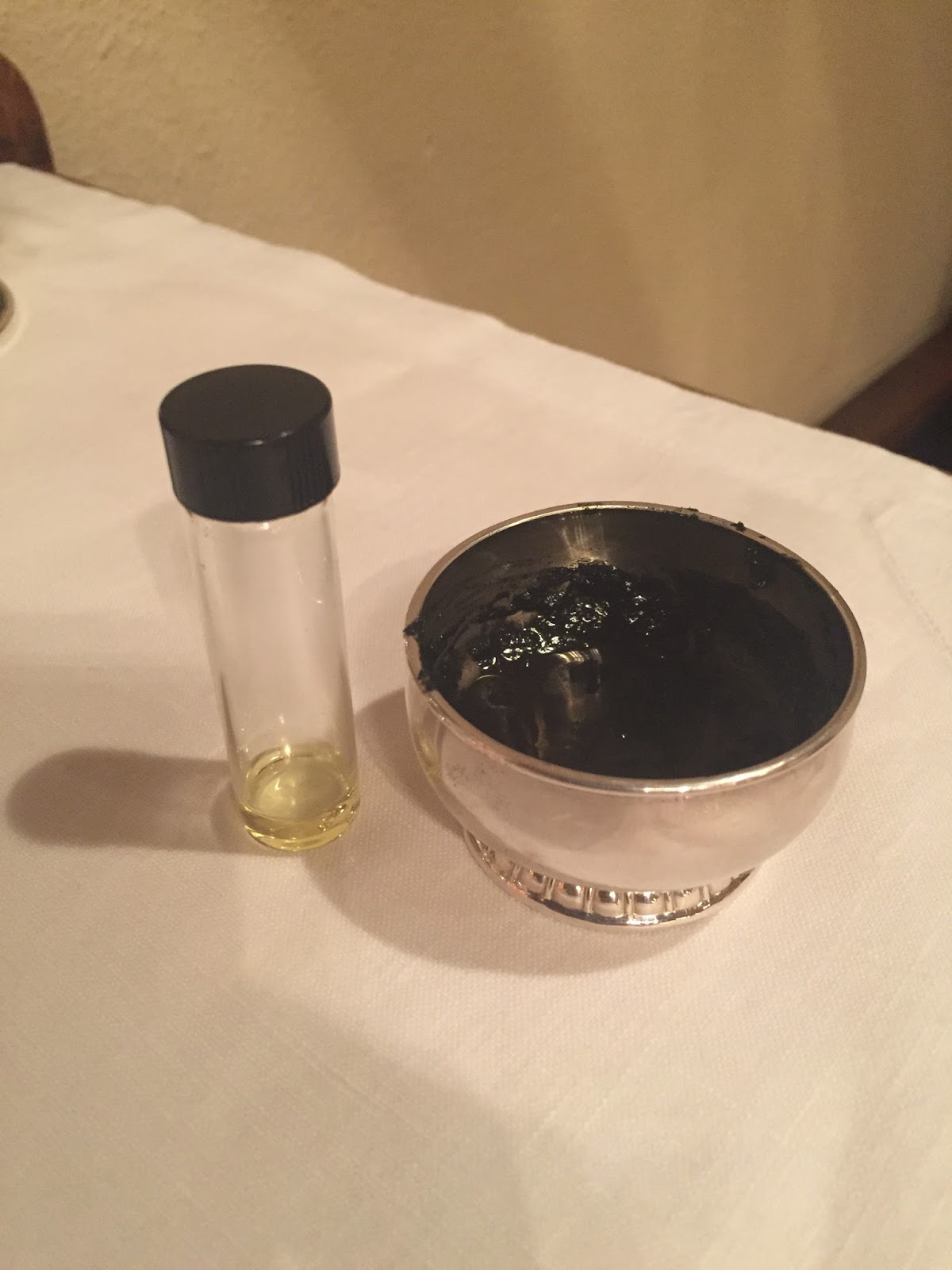
If we could not wash off the Holy water and Chrism oil from Baptism, nor the ashes from today’s liturgy we would notice that we have multiple crosses in precisely the same location on our brows. An almost invisible strand ties together today’s penitential rite and the Christian entry rite. Surprisingly, the service of Holy Baptism begins only 29 pages after the conclusion of the Ash Wednesday service; somehow though, the two feel farther and further apart than that. What binds together these crosses on our foreheads? What ties together the one made of ash and the one marked with oil?

In a few moments, you will be invited to observe a Holy Lent, and then anyone who wishes will come forward. You will be reminded that you are dust and to dust you shall return, and at that same moment burnt up branches from Palm Sundays past will be shaped into the form of a cross on your forehead. In this way, one year’s journey to the Cross fades into the next. And, for many ages Lent, which comes from a word meaning spring, has served as a time when converts blossom into full-fledge members of Christ’s Body. On one side of Lent the ashen cross and on the other at the Great Celebration of Easter the cross of oil, in between was the final formation before the church recognized one as a Christian. Ash Wednesday, Lent, and Holy Baptism, thus have been inextricably linked together, as a time of growth. And yet, is that all this season is about: personal progress?

Lent, if approached haphazardly, shifts into a short-lived season of discipline used for our own purposes of self-importance. When we make Lent a six-week season of “doing good, rather than building a Lent that becomes a life” we miss the mark.[1] As all of us, the novices and the elders alike, begin to walk the Lenten way of the Cross, we would do well to remember that Jesus’ public ministry began not with forty days of piety or self-discipline, but first within the deep, brooding waters of Baptism—waters that call to mind the depths over which God first moved to create. As there is only one Baptism, once baptized we do not enter these waters again, but Lent does allow us to be refreshed and renewed, as we repent and return to God. As we turn to God in this penitential season we may very well see the hidden feature tying Ash Wednesday, Lent, and Baptism together in an unexpected place. For these occasions are as much about death—that is turning away—as they are about new life. Somehow though, death does not play well in our culture.

Death tends to be a topic of which we steer clear at polite social gatherings. We, as a country, are so uncomfortable with death that we spend approximately $20.7 billion a year, so that those in the funeral home industry can deal with death for us.[2] Even though death comes for us all, we attempt to evade it through plans, schemes, and regimes to stay young forever. All of us go down to the dust, and much as we may want to ignore this truth, Ash Wednesday gives us an opportunity to stare death in the face, just like during Holy Baptism. Today we do not dwell morosely on our mortality, but instead as we feel the cross marked on our brows we can realize again the overwhelming reality that even in death we are Christ’s own forever.

When children, youth, and adults are marked in Baptism we tend to focus solely on the new life, but without the often overlooked death that precedes it this rite makes no sense. In Baptism we die, plain and simple. Our individualistic ways are called to cease, as God draws us up into the corporate identity of Christ. We are not just marked as Christ’s own forever, but we become part of the Body by dying to the self. As the Rev. Dr. Will Willimon puts it:


The chief biblical analogy for baptism is not the water that washes but the flood that drowns. Discipleship is more than turning over a new leaf. It is more fitful and disorderly than gradual moral formation. Nothing less than daily, often painful, lifelong death will do. So Paul seems to know not whether to call what happened to him on the Damascus Road “birth” or “death”—it felt like both at the same time.[3]


A Lent following Jesus, not to mention a life following him, cannot be about making ourselves feel good because we do some new discipline or fast for a few weeks each springtime. Jesus, himself makes this clear in the culmination of his Sermon on the Mount, which we hear today. If our reward is based on impressing others because we are merciful, prayerful, or fasting, we are missing the point. Even if we are doing some great spiritual discipline off by our lonesome, if we are doing it for our own benefit, we are missing the point. “What reward are you seeking?” Jesus seems to ask, “An earthly one for your own benefit or a heavenly one that draws you ever closer to God?” Put another way, “Do not be holy because it is what the world expects of you [or even what you think is required of yourself]; rather, learn to live holy lives because a closer relationship to the God who sees in secret will be reward enough.”[4] Die to self, so that Christ may live!

Today, Christ calls us not to immortal greatness, but to ponder our mortal smallness. Remember that not only will we one day die, but also that we have already died in Baptism. The death we die in Baptism brings us into a new life—a life no longer focused on doing new things to prove ourselves worthy to others, to ourselves, or to God. This is Good News! In Lent, then we are free to explore how we may see God living and breathing anew within us.

Churches traditionally sing “Just As I Am” when they baptize folks. It’s a fantastic song, but I am partial to a line Presiding Bishop Michael Curry borrowed from Max Lucado, “God loves us where we are, but God does not intend to leave us where we are.” When we die to ourselves, not just in Lent, but throughout our lives, we experience the transforming power of God’s love. This may happen by getting rid of something that distracts us from seeing God who resides closer to us than our own heartbeat. This may happen by taking on something that focuses us on God who knows us in secret. This Lent, as your brow is marked by a cross of ash remember the other cross marked when you died in Baptism, so that Christ could live within you.

Lent is when new life abounds, for we turn away from a society obsessed with outrunning death and towards the living God who calls us to die to self, so that Christ lives. Lent is when we become less, so that Christ may become all. Let Lent permeate beyond the next 40 days. May we embrace God’s call to turn towards the Lenten path, the Cross, and those Baptismal waters where death and new life meet. May we remember that we are dust and to dust we shall return, so that we may embrace our eternal God.  May we have a holy Lent filled with God’s transforming love that meets us where we are, but brings us into the ultimate life of God.


[1] Anschutz, Maryetta. "Ash Wednesday: Pastoral Perspective." In Feasting on the Word, edited by David L. Bartlett and Barbara Brown Taylor, 20. Louisville, KY: Westminster John Knox, 2010.

[2] Public Broadcast Service. Homegoings: The Economics of Funerals. June 24, 2013. http://www.pbs.org/pov/homegoings/economics-of-the-funeral-industry/ (accessed February 20, 2017).

[3] Willimon, William. "Repent." In Bread and Wine: Readings for Lent and Easter, 9. Walden, NY: Plough Publishing, 2003.
[4] Anschutz, Maryetta. "Ash Wednesday: Pastoral Perspective." In Feasting on the Word, edited by David L. Bartlett and Barbara Brown Taylor, 20. Louisville, KY: Westminster John Knox, 2010.

Sunday, February 19, 2017

Perfect Children (of God)

Now that I am an expectant father my perspective has begun to shift. Rarely if ever did I get upset with parents of unruly children, but now that I have no clue how my preacher’s kid will act I feel even less critical. I find that I am quietly observing parenting techniques for raising well-rounded children. It appears that a mix of discipline, love, diligence, sacrifice, patience, and perseverance is crucial. What I am also discovering is that when I am around parents—even those with grown children—I am getting a lot of sage wisdom.

Mentally I am writing down this parenting acumen. Sleep when the baby is sleeping. Mylicon drops help to relieve gas. Get someone to throw a diaper shower to stock up on the first few months of changing supplies. Of course, I struggle not to get ahead of myself, as I really like to plan everything out far, far in advance.

Take for example the other night, Kim and I were out walking and I began mapping out the highest levels of lessons that I hoped our child will one day learn: self-actualization, laying down one’s life for a friend, self-sacrifice, enlightenment, and even union with God. As she shot me a sideways, knowing kind of glance, I said, “Now, all we have to do is track back down from there to the lower levels, like walking, potty training, and manners.” I know, I am ridiculous. On the Myers-Briggs Type Indicator I am a Judging type, which sounds worse than it is. The Judging types want a more structured and decided life, like planning out every step of their children’s lives, as opposed to a Perceiving types who are more willing to go with the flow.

Reflecting on my craziness in that conversation, I recognize that I have not nailed down too many of the higher level lessons myself. Sure I’ve learned walking, potty training, and some manners, but spoiler alert there is more to growing up into a disciple of Christ Jesus than just social etiquette. And, following Him is more than just being nice. As shocking as this is going to sound, Jesus did not live a well-mannered life! In fact, in Matthew’s telling of the Good News, the core message of Jesus’ ministry, the Sermon on the Mount, flew in the face of the prevailing practices of the day—the manners, if you will, of his time.

The statements which Jesus started, “You have heard that it was said…” were the prevalent ways. If someone poked out your eye, it was reasonable for you to take his in return. When one slapped you across the face, you were to retaliate with a slap of your own. If a person took your coat, you went to get their jacket! You were not to give to those who did not deserve it, nor were you to trust anyone. This was the way to make it through life. Oddly enough, we so often fall into this same way of thinking.

Justice today consists of retaliation whether with violence, lawsuits, or insults. And, I am so often guilty of partaking in a vengeful way of thinking that I wonder if I have even learned that lesson taught to me in kindergarten: do unto others as you would have them do unto you. How in the world am I going to teach someone else to live, if I am struggling myself? The answer may very well sit within the last words Jesus spoke in today’s passage.

Jesus capped off this message saying, “Be perfect therefore, as your heavenly Father is perfect.” Perfection does not simply mean the highest score possible, nor the unflawed Olympic routine, nor the ideal human physique as assessed by some magazine. No, perfection means completeness or fulfillment. Our God is perfect, without blemish, and also without need. All that God creates is out of God’s good will, over abundance, and overflowing-ness (that is not a word, but you know what I mean). Our call to be perfect, we often think, must be achieved on our own. However, we cannot do this by ourselves, we must do this by relying less and less on our own ability, our own works, and our own laws, so that we may be fulfilled by our heavenly Father who fulfills all!

God is our heavenly Parent who does not just look down at us as we struggle to learn how to live, no our God came to show (and still comes to show) us the way into true fulfillment. Jesus is that way, and he teaches in today’s lesson how to practically go about learning these difficult lessons—ones that I hopefully will learn, so I may teach my child. When someone wants to rip out my tooth do not seek retribution. In fact, I should not resist an evildoer. Instead, I must rely on God.

When a man wants to take my coat, do not go to a lawyer, but instead see if he needs a cloak as well. If a woman troubles me to walk with her for a mile, go an extra mile to see what life is like in her shoes. As much as I might question the motivations of people who beg, rely on God instead, and give to all who ask. Perhaps most difficultly in a world in which duality is the normal—a world in which even without trying there are enemies across political, racial, socioeconomic, and religious lines—Jesus calls me to “Love [my] enemies and pray for those who persecute [me]” (Matthew 5:43).

The things that Jesus said are hard, impossibly hard even. And, I am well aware that some of the things he said, maybe all of these things, do not make sense to us. Turning the other cheek, giving to all who ask, loving our enemies, how foolish does this all sound? Paul reminded us though, “[We] should become fools so that [we] may become wise. For the wisdom of this world is foolishness with God” (1 Corinthians 3:18-19). And, if we wish to become children of God we must foolishly continue to love everyone, even our enemies, Jesus said.

So how do we do the impossible? We don’t, or at least not alone. Our fulfilling of these things must come from us relying on God. Our sustenance physically, spiritually, emotionally, and psychologically cannot come from seeing our enemies fail, but by trusting in God and risking everything to boldly love those whom we want to despise or who—we believe—hate us. If we are to grow up into children of God we must become fools for Christ who rely not on ourselves, but on the overabundance of God. Turn the other cheek, give to all who beg, love your enemies, and be fulfilled children of God, just as our heavenly Father fulfills us!

Tuesday, February 14, 2017

Perfect

"Be perfect therefore, as your heavenly Father is perfect." This is the way that this coming Sunday's Gospel passage (Matthew 5:38-48) ends. On the surface Jesus appears to be calling his followers who were listening to this portion of the Sermon on the Mount into an error-free existence. To our modern ears we may believe that Jesus calls us too into a life without sin, but if we are being honest none of us is anywhere close to being without error or sin.

I do not have to go very far into most days before I am doing something that reminds me that I am NOT perfect. While I do not typically use this kind of language I work with someone who does, we are all miserable sinners. It's true, even if I also want to hold up the Biblical truth that we were made "very good" and we are "very good." Still would Amazing Grace be such a profound song that has stood the test of time without the lines, "Save a wretch like me," "I once was lost," as well as the claim of being spiritually and otherwise blind? So if we are anything but perfect why would Jesus challenge those listening to be perfect?

Being perfect as our heavenly Father is perfect does not require that we do everything a particular way walking through life afraid that we may make a mistake. This is not the seventh inning of a perfect game when we can not talk about what is transpiring for fear of jinxing the pitcher. Our Parent in heaven is blameless, without sin, and yet God's perfection has another element that we need remember when approaching what Jesus said. God's nature is completely fulfilled. In other words, in God's nature is absolute unto God's self!

It took us some time to get to this understanding as Christian people, and we express this completely unique completeness when we talk about the Trinity. Within God exists a community of love, self-giving, opening, making room for the other, and being vulnerable that is complete. God needn't rely on anyone but God; however, out of love God created all things, including us. When we rely upon the ways of the world or our own way we inevitably feel let down or incomplete. Jesus described these paths of stumbling saying "You have heard that it was said...", and whether it was anger, lust, or lying in last week's Gospel or vengeance, selfishness, or holding grudges in this week's this way is incomplete.

This authentic type of perfection calls us to rely completely upon God. We may not get our cloak back, but God will provide. We may lose friends who think we are not loyal to their cause, but God will provide. We may face hardship, struggle, persecution, or even death, but God will provide (and bring us into the fullness of life). This perfect way of God not only sometimes seems unappealing or difficult, but it also can seem so foolish. Paul wrote about this in this week's Epistle lesson. Strangely enough I think that life sometimes makes us fools, so that we may rely more fully not on ourselves, but on God. So as you go through your day look for the places where you are relying too much on yourself, and instead lean into God's fulfilling way. It may seem foolish, but God's perfect ways so often do.

Monday, February 13, 2017

The Hits Keep Coming

We last left Jesus preaching against anger, lust, divorce, lying, and anything that separates us from our neighbor in yesterday’s Gospel lesson. We have to lay down our gift at the altar and deal with anything we are holding against our neighbor before we can be right with God. My colleague Evan gave such a clear message about our need to see this, as he said “there is a brokenness among us that can only be healed if we recognize that victory for our side isn’t as important as communion with the other.” After such a profound and pointed message from Jesus within his Sermon on the Mount, I am sure that when we open up the Lectionary to see this coming Sunday’s Gospel it will be a piece of cake… 

What? Are you serious? In this passage from Matthew Jesus says, “Turn the other cheek,” and “Give your cloak as well,” and “Go also the second mile,” and “Give to everyone who begs from you,” and “Love your enemies,” and “Pray for those who persecute you” and to top it all off, “Be perfect!” Come on man! Seriously? Could we not get a week of “It is okay to be mad at those who are mean to you.”? Or, perhaps “If someone slaps you it is appropriate to hit them back.”? How about “Be pretty good, for you are a pretty good person.” I mean this is asking a lot of us. And, in all seriousness that is precisely the point of discipleship, of following Jesus, and of taking on our true nature as a child of God. Being a Christian is not a hobby that we take up in our spare time!

As we travel through this part of Matthew we may feel as though the hits keep coming, and that every week Jesus ups the ante. We experience this sentiment because it is true. Discipleship as outlined in the Sermon on the Mount requires not just more and more of us, but all of us as we grow closer and closer to God and to one another. The examples Jesus used of how to follow God in everyday interactions with one another push us to examine how we treat ourselves, our families and friends, and our neighbors. A full life, a life in Christ, does not consist of retribution, vengeance, and defensiveness, but something else entirely.

To be a follower of Jesus calls us to live detached from the automatic, instinctive response when others treat us with disrespect, anger, or meanness. Not responding to disrespect with disrespect or anger with anger or meanness with meanness cannot happen overnight, nor can it happen on our own. We must live life differently than how we so often live. We instinctively follow the impulses in response to our thoughts, feelings, emotions, conditions, situations, or other persons. To turn the other cheek is to ignore the rage that wells up inside of us when we are mistreated, so how do we do this?

Jesus ends this passage with the answer to this question: being perfect (and this deserves more exploration throughout this week). Perfection is the way that we must live our lives if we wish to live differently than the world around us; however, perfection is not what we may think it is. It is not a perfect score, like on a standardized test or in Olympic Gymnastics, nor is it pitching a perfect game like in baseball (Pitchers and catchers report today by the way!), nor is it any other human measure of being really good at something. Perfection in the Father is about one thing: fulfillment. Being fulfilled not by the result or the outcome, but by growing ever deeper in relationship with our true self, our neighbors, and our God. Let us be fulfilled by our Almighty Parent!

Wednesday, February 18, 2015

Having One Purpose

In college I went through a Faith Crisis. Maybe you have experienced a period in life like my own. I began to question everything that I had previously held sacred from my beloved Episcopal Church to the Holy Scriptures. I reverted back to my two or three-year-old self, asking repeatedly, “But why?” to my longstanding beliefs about God existing, God loving me, and Jesus being my savior. Why is Jesus my Savior? That was the question that seemed to linger the longest without my having any progress towards an answer.

As an “invincible” and angst-y twenty-year-old I believed that I needed not a Savior. “From what is Jesus even saving me?” I questioned some friends who were also struggling with their faith. No ghouls, ghosts, or goblins attacked me. No struggle for existence happened. Maybe an existential dilemma or two, but comfortably I sat thinking that I needed not a Savior. At the time I could not comprehend or feel that what I need saving from was not something outside of myself, but something within me.

No beasts existed on the outside, but on the inside a monster lurked that all of us inevitably must face. That monster is the Truth: We are mortal. We are broken. We are sinful. And while I know that we are wonderfully made “very good” in God’s eyes, the lives we live so often distort our relationship with God, as we believe in our own divinity instead of God’s. Like the naïve twenty-something that I was, we sometimes must turn our backs on God scorching the forest that was our faith, so that God can grow something anew and we can realize that it is not we that saves ourselves.

Today is a day when we come face-to-face with our mortality, our brokenness, and our sinfulness. The fires may have subsided, but the ashes remain. The marks we will receive from those ashes on our foreheads keep in the forefront of our hearts and minds that we are not infinite, but merely dust. Yet, how do we honestly confront the truth of our existence? Some of us will take on Spiritual Practices that aid us in remembering the Truth. And yet, Jesus warns us to be mindful of how we go about this discipline.

Throughout the Sermon on the Mount, of which today’s Gospel lesson is a part, Jesus teaches of alms giving, praying, and fasting, as spiritual disciplines. These are ways that we can all build upon our relationship with God. Still a temptation exists in believing that these practices are for achieving some external merit. Even when we do our best, these spiritual disciplines have a way of manipulating our egos making us think we are better than we are.

Not too long after God had found me in the burned up Faith of my youth, I began discerning a call to ordained ministry. Every week I would sit with a mentor and we would discuss our spiritual lives. Inevitably whenever one of us said, “Man, my prayer life is kicking!” or “I am on a real roll spiritually!” that would be the moment when I would fall on my face or he would stumble in his walk with Christ. Again, I wondered why?

A quick glancing at today’s reading from Matthew might give us the impression that Jesus only warns about spiritual practices falling prey to hypocrisy. While hypocrisy remains a troubling attribute of Christianity, a deeper problem persists. Doing something for others to see, saying something and doing the perceived opposite, or being overly showy with religious gestures all seem detestable. Yet, that is not what my mentor or I were doing. We were simply sharing our faith journey, but that moment of saying, “I’m doing well,” took the concentration away from God. Digging deeper in today’s Gospel lesson, we discover that Jesus’ primary concern is one of intention.

Giving alms, praying and fasting do not exist as stepping stones, but rather they develop in themselves a deeper connection with God. Put another way, when we follow Christ’s warning the spiritual practices we choose are most beneficial when they possess an inborn connectivity with God. The point of giving alms, praying, or fasting is not to be seen, heard, or respected, but rather to be in the presence of the Almighty.

Giving up something during this season comes from a need to recognize our complete reliance upon God. Taking on a new discipline is not about also losing a few pounds or restarting a New Year’s resolution. Instead let the Spirit guide your Lenten Discipline, so that whatever it is you do or do not do will in and of itself push you to experience the transforming release of God’s grace. Does this mean we say nothing of our Lenten discipline?

Lent is a communal season for us and to practice Lent as a community remains a valuable gift of the Church. Yet in this time when we take on disciplines we must examine the purpose of what we are doing. Are we trying to save ourselves like I thought I could when I was younger, are we thinking about what others will say or think about whatever it is we are doing, or are we yearning to be in deeper communion with Father, Son, and Spirit?

Lent is a season when we practice storing up treasures not here on earth, but in heaven by returning and reconnecting with the Almighty. This is the one, pure purpose of our Lenten journey. If we are pious for the sake of power, control, affection, esteem, approval, pleasure, security, or even survival, then we are setting ourselves up to be cloth to a moth, metal to rust, or goods to a thief. We are mortal, we are broken, and we are sinful, but we have a Savior who yearns for us to grow closer. Not for the benefit of anyone or anything else, but because God loves you so dearly and yearns that you turn back to God!