Showing posts with label Psalm. Show all posts

Sunday, February 28, 2021

The Paradox of Following Christ

Among the several paradoxes in today's readings is Christ's call: If you want to save your life, you must lose it.

 © Seth Olson 2021

February 21, 2021—The Second Sunday in Lent

Genesis 17:1-7, 15-16

Psalm 22:22-30

Romans 4:13-25

Mark 8:31-38


A video of this sermon may be found here.

Holy God, let my words be your words, and when my words are not your words, let your people be cunning enough to know the same. Amen.

I love a good paradox. You know something that is a both/and! Observing something seemingly absurd or self-contradictory that when investigated proves to be well founded or true[1] usually makes me think or laugh. Think about those delightful figures of speech called oxymorons that slam together conflicting words.

Phrases like “jumbo shrimp” “deafening silence” “act naturally” “alone together” or “small crowd”. Our everyday speech overflows with contradictions—and they usually make us think or laugh. However, when we begin talking about religion, Faith, or our relationship with God, I believe, we want anything but a contradiction. Especially after this year of twists and turns, disharmony and isolation, disease and death, we yearn for our connection with God to be plain and simple. Can’t we just press the easy button?

The lessons for this day, the Second Sunday in Lent, are anything but straight-forward. Sorry! Especially in Genesis 17, Psalm 22, and Mark 8 paradoxes abound, but before we throw up our hands in exhaustion or tell God to just call us when the tomb is empty and victory is won, let us sit with the contradictions, the complications, and the enigmas present in these lessons.

For as we explore with our hearts, souls, minds, and strength, we may see that God does not shy away from the messiness of our lives, but instead, that messiness is precisely where God meets us. God continually steps into human frailty calling us into wholeness—even in the chaos that has been 2020 and 2021.

Last week Mary Bea pointed out the covenants that God makes with God’s Chosen People throughout the stories of the Hebrew Bible—Covenants of Life, Land, Law, and Lineage. We heard about God making the Covenant of Life with Noah seven days ago. Today, we hear about the Covenant of Land, or we would have heard it if our lesson did not cut out verses 8-14. Although the Covenant of Land is crucial to the People of Israel, God does not stop there with Abram. God steps into the messiness of the relationship between Abram and Sarai to make another covenant.

God had already given Abram a son, Ishmael, but Sarai was not Ishmael’s biological mother. Sarai’s servant Hagar was. Forming this strangely blended family created tensions in the relationships between Abram and Sarai and Hagar. Sarai could not stand for Hagar to be around, so she made her leave. With Hagar and Ishmael gone and getting advanced in years, Sarai’s hopes of being a mother were finished. God though was not finished. God entered the life of Abram again, but this time God’s promise was not simply to Abram.

God stepped into the chaos of Sarai’s life to make her a promise of childbirth—even though she was 90-years-old. If there ever were an oxymoronic phrase “nonagenarian pregnancy” might be it. And, as a mark of God not only stepping into the strangeness, but also bringing a blessing from it, God gave Abram and Sarai new names: Abraham and Sarah. They became the parents of many nations. What do we learn from the paradox of this story? God enters the complications and complexities of human lives to show us the truth, that God is ever walking with us, even when divine presence appears absurd or contradictory!

The paradoxes though are only getting started. You might remember our Psalm for today from such occasions as the Palm Sunday Passion Gospel, Good Friday liturgy, and the Last Words of Christ. Typically, what we hear from Psalm 22 is “My God, my God why have you forsaken me?” Such a soulful lament could never end in hopefulness, praise, or faithfulness… and yet, this Psalm does! It is not unique for its shape, many Psalms twist from lamentation to exaltation, but something special does resound from this psalm.

Psalm 22 expands the scope of God’s Reign. In it we discover that God’s Kingdom does not just encompass the People of Israel long ago, but all the nations to the ends of the earth, to those yet unborn, and for all generations forever. God reaches into human lives even when we are fearful or believe God has forsaken us, for God’s Reign is larger than any of our fears or doubts. What we discover from the paradoxes of this Psalm: God enters the complications and complexities of human lives to show us the truth, that God is ever walking with us throughout all Creation and forever, even when divine presence appears absurd or contradictory!

Speaking of contradictions—is there a more challenging paradox than, “For those who want to save their life will lose it.”? How can you have a life if you have given it away? This sounds like eating a cake and having it too. Without proper context we might assume that Jesus in today’s Gospel lesson is telling us to die for the cause. Maybe. But, as we expand our vision to see beyond this eye-catching phrase, we observe there is more to this paradox.

In the section right before today’s passage, Peter called Jesus the Messiah or the Christ. Peter was right—Jesus was (and is) the Messiah, the Christ, but Peter was wrong in what he meant by that statement. Peter thought Jesus would vanquish all the enemies of God’s People. Like some warrior king of old, Jesus would conquer Rome, and the disciples would preside sitting upon thrones in regal palaces. So, when Jesus taught that being the Christ meant undergoing great suffering, rejection, and death, Peter could not stand it. He interrupted Jesus and rebuked his teacher in private.

Seemingly, Jesus did not take kindly to Peter’s mistaken understanding of “Messiahship.” He not only rebuked Peter, calling him a stumbling block, which we translate as “Satan”, but he also corrected the erroneous teaching in front of not only the disciples, but the crowds too.

What was the teaching? To be a follower—not just on social media, but in real life (IRL)—one must deny oneself, take up one’s cross, and follow Jesus. To gain life in Christ is a paradoxical endeavor—not just long ago, but in our day too. Life in Christ calls us to lose our lives—not in the sense that we go looking for a fight or intentionally seeking suffering. We must lose our life in the way that Peter eventually did.

Thanks be to God for Peter’s paradoxical witness. This shaky one was astonishingly the rock on which Jesus built the Church. It took rebuking Jesus and being called Satan. It required denying Jesus three times before the cock crowed on Good Friday. It necessitated hiding away until the women found the tomb empty, but eventually Peter lost his life enough to take hold of new life. He finally let go of his dream of who Jesus was, so that he could take hold of God’s dream of who Peter was to be.

This is what we can do too! We can let go of what we imagine God is supposed to be doing for us in our world and we can listen for what God is dreaming our lives are to be. God enters the complications and complexities of human lives to show us the truth, that God is ever walking with us throughout all Creation and forever, and even when divine presence appears absurd or contradictory, we are called to live the life God dreams for us!

We see the truth of this in the lives of Abraham, Sarah, the Psalmist, and Peter. And, it is true for us too! God enters the brokenness, the messiness, and the sinfulness of our lives… God walks with us even when we are in complicated relationships with our family, friends, or neighbors… God is with us when we wonder “Why have you forsaken me?”… God calls us to let go of life, so we may take hold of God’s dream for us. We do not have to understand, nor can we even comprehend all the paradoxes of life.

And yet, in all those vexing both/and moments God is not only present, but also calling us to see the profound dream that God has for us individually and collectively.

This week, our Lenten Speaker is the Rev. Katie Nakamura Rengers, and in her beautiful, challenging presentation she wonders, how is the Spirit calling us to form the Church at this odd time in human history and Church history? For us to meet this moment of challenge, we may very well find ourselves holding onto new paradoxes—being a church without walls, taking the altar out into the world, and hearing the Spirit speaking in mundane or secular spaces. God is dreaming—are we listening?

God enters the complications and complexities of human lives to show us the truth, that God is ever walking with us throughout all Creation and forever, and even when divine presence appears absurd or contradictory, we are called to live the life God dreams for us not just here and on Sundays, but everywhere and everyday! Amen.


[1] “Paradox” from OxfordLanguages [accessed 2/24/2021. https://www.google.com/search?client=firefox-b-1-d&q=paradox].


Wednesday, August 14, 2019

How Do We Preach Division?

Preaching on the weather (and James Spann) would be much easier than preaching on this set of readings.
There’s a whole lot in this week’s readings worth noting: Jeremiah sounding off against false prophets, God striking down false gods in the council of heaven, the writer of Hebrews challenging readers to run the race of perseverance, and Jesus revealing his pyromaniac side. Given we encounter a feisty and fiery Jesus what’s a preacher to do? I believe a helpful place to start is Jesus’ last question.

“You know how to interpret the appearance of earth and sky, but why do you not know how to interpret the present time?” Everyone can talk about the weather—it’s a universally acceptable topic of conversation. I particularly love conversing about clouds, storm systems, and barometric pressure, but I’m the guy who has four weather apps on my phone. My sweet sister gifted me a couple of the expensive ones because she wanted to make sure I’m weather aware—and boy am I! I’ve got the same radar that James Spann uses, and I can carry it around with me everywhere I go. I know which way the wind is blowing, have alerts for all types of severe weather, and even know when it’s going to start raining minutes before it happens. So, I feel pretty good about answering Jesus, “Yes I know how to interpret the appearance of earth and sky—or at least my app developers do.” But, the trouble comes in the second part of his question (I can’t seem to escape an impassioned Jesus). Why do you not know how to interpret the present time?

Why do I not know how to interpret the present time? Good question! The more I think about the present moment though, the more confused I get. It’s not to say that it wasn’t complicated 2,000 years ago. Especially since Jesus turned his face toward Jerusalem in Luke 9:51 the drama has heightened but the world around Jesus became more delineate, more black and white. And, this Sunday we hear Jesus drawing or perhaps burning a line in the sand. Those listening were challenged to make a decision, but it wasn’t turn or burn like we might be thinking (more on the type of fire in a moment).

The early followers of Jesus would have offended their parents or children or neighbors, as they sided with Jesus instead of other worldviews. Those times were certainly divisive, and with hindsight and bias we judge which side we would choose to join. What about today though? A good sermon this week might highlight the challenges we face in our current divisive age.

Right now appears even more divided than any other time
—including Jesus' own. We can see people’s opinions instantaneously on social media. When we do we can simply unfriend or unfollow those people with whom we disagree. We can watch our chosen brand of 24-hour news to further hammer home how right we are—and how wrong everyone else is. People can even quit going to a church if someone in the pulpit or the pew says something they don’t like. But, take any hot-button issue and try to interpret a peaceable solution and life will get quite complicated quite quickly. I don’t mean that people cannot figure out what they think about given issue—or what side to choose. No, I mean that all of us are struggling to coalesce and find consensus. It feels impossible to arrive at solutions where all are heard, respected, and satisfied with the result.

Experiencing the log-jammed nature of today helps me to understand Jesus’ frustration in this week’s Gospel lesson. A helpful sermon might speak of fire (told you I'd come back to it). Fire not as a way to scare people into choosing heaven over hell, but rather as a way to burn away that which does not fall in line with God’s will. Jesus used this image of fire to illuminate how God refines us. Jesus was rifting on the same image that Jeremiah used several centuries earlier. This might be another good jumping off spot for a sermon.

Jeremiah was tired of hearing the false prophets of his own day. These errant teachers were claiming that they had dreams from God, so that they could benefit themselves. This is not unlike some infamous televangelists who use hapless viewer’s charity to buy private jets or mansions. Jeremiah could not condone any of these nightmarish dreams which led God’s people astray.

A compelling dream and a flashy sales pitch can make people fall for just about anything. In this case it could even make God’s people forget God’s name. However, even more powerful than the false prophet’s dream is the Word of God. The Word of God can burn like a dividing fire and split open like a rock hammer. Still in both the Gospel lesson and here in Jeremiah we may not understand what is at stake along these dividing lines, as we experience the fiery word of God, which is where this week’s Psalm comes in handy. Again, another good sermon departure point.

Often I overlook the Psalmody in my sermon prep. They’re just old songs, right? Yes, but even though we often read them and move on these hymns cover the gamut of human experience from lamentation to ecstasy, from birth to death, from history to the end times. And, this week's psalm has a direct way of depicting who God truly is.

In Psalm 82, we are placed in the council of heaven, a common concept in the Ancient Near East—including ancient Israel and Judah. Here, YHWH or the Most High God was holding all others that were not the Most High God accountable. God took a stand against all forces not God. God took this stand because these other forces were judging unjustly. We might wonder what is the most important characteristic that makes God… well… God. Is it omnipotence? Is it infinite power? Is it immortality? What is it?

Psalm 82 responds to those questions in an unexpected way to me. All those forces in the council of heaven were cast down out of the realm of the immortal because they were... wait for it... unjust. God's most critical component here is not omnipotence, power, or immortality. It's justice! These others were showing favor to the wicked, not saving the weak and the orphan nor defending the humble and needy. They were not rescuing the weak and the poor, nor delivering them from the power of the wicked. And in a great cosmic aside, God said, “They do not know, neither do they understand; they go about in darkness; all the foundations of the earth are shaken.” In other words, these others go about in ignorance and haphazardly shake the very foundation of creation with their injustice. As a result of not living into the justice that God intended, they were cast out of this celestial realm.

Now my fellow preacher, justice is a powerful word to throw around from the pulpit. When I say justice everyone can nod their head and in other parts of the Jesus Movement people might even say “Amen!” to such a profound word. However, there’s a problem with this word. When I say justice there are as many different concepts of what that looks like as there are people in the pews. So, let me elaborate on this term using the vision that God sets forth here in Psalm 82 and also in Luke’s Gospel account.


Justice sides not with the wicked—i.e. anyone who takes advantage of the poor—but rather God’s vision of justice saves the weak and the orphan, defends the humble and needy, rescues the weak and the poor, and delivers them from those who would exploit them. And this theme, this vision of justice isn’t simply present here in Psalm 82, it’s also what Luke has been building towards throughout his entire story of Jesus.


Three canticles at the start of Luke portray this vision. Zechariah, John the Baptizer’s father, sang of this justice when he spoke of being delivered out of the hands of enemies and into freedom by God’s mercy. Simeon shared of this justice through the release for all of God’s people that he saw in the coming of the Christ child. And Mary most pointedly praised God’s justice as she sang, “He has shown the strength of his arm, he has scattered the proud in their conceit. He has cast down the mighty from their thrones, and has lifted up the lowly. He has filled the hungry with good things, and the rich he has sent away empty.” This is the vision of justice that God makes known to us, but what does this mean to us? And how can we preach when we and our congregations are often proud, mighty, and rich? I don't have a good answer for this, which is why I'm still working on my sermon.

There is a dilemma set forth in this week’s texts. Jesus touches on a nerve that Jeremiah experienced in his day, and we feel in our own. Jesus points to divisions that arise when we have to choose something paramount over something important. What happens when the stakes are raised to this level?

I believe we find the most profound truth in the psalmist's words. God is not God if God is unjust. And we in turn are not God’s people if we are perpetuating injustice. We are called to persevere just like that great cloud of witnesses persevered in the letter to the Hebrews. Our perseverance as preachers is difficult. For calling out injustice in our congregations and in our world must be done with a pastoral heart. And first Jesus’ fiery, cutting language must convict us as followers of Christ, so that all which does not fall in line with God’s will burns away. How do we preach division? First, we must allow God's refining fire to unite our true selves with Christ.

Wednesday, March 13, 2019

Talking About God

Have we subtly forgotten how to talk about God?
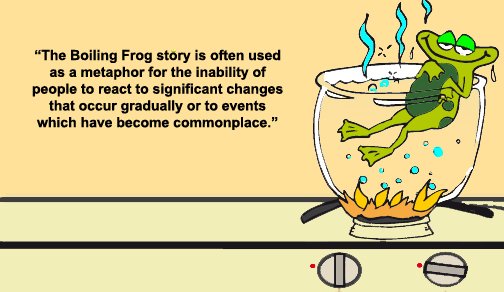
There is a well worn analogy about boiling a frog. It goes: "The best way to boil a frog is to put it in a pot of lukewarm water and slowly turn up the heat such that the frog doesn't even notice it is being cooked alive." I am unsure if you have ever eaten boiled frog, but I haven't. Still the analogy can be helpful for describing our inability to perceive changes that are slowly happening around us. One such subtle change was described by religious scholar Jonathan Merritt last fall. 

Merritt's opinion piece from the New York Times focused upon the gradual decline of spiritual conversations and even positive words associated with Christianity over the past few centuries. The article is well worth a read, especially if you are a lay or ordained leader who has recently bumped up against a language barrier between the churched and the unchurched. Even more specifically if you are preaching on the Second Sunday in Lent (or listening to a sermon preached this coming Sunday) Merritt's words are useful. This is because the readings this week possess a theme of talking to or about God in innovative ways that still connect with the eternal changelessness of God--something we in our current age need, at least according to Merritt's assessment. So, let's look at this Sunday's lessons and how in this Lenten Season we might discover new ways of speaking to our neighbors about the transformed life that comes from knowing God.   

The First Lesson comes from Genesis 15:1-12,17-18 and tells of the Word of the Lord coming to Abram (who will later be known as Abraham) in various visions. Abram who was struggling with the reality that he might not have any children--a big deal in any era--worried about his legacy and lack of progeny. God though had other plans than Abram dying childless. In truth, God knew already that Abram would be the father of not only many children, but also many nations and religions. What is linguistically striking though is how the author of Genesis describes God in this passage.

Observe the different ways in which God is described: God is the Word of the Lord, God is a smoking pot floating between carcasses, God is focused upon righteousness (a fancy way of saying a right relationship), God is generous, God uses the natural world and visions to communicate God's points, and God even makes a covenant (that is an agreement or contract) with a lowly, nomadic, and worried human being. In this story so many things pop up that feel uncanny or odd, but it is the bit pertaining to the covenant that bears breaking down. Let's take a closer look.

God made a promise to Abram that his children would have their own land and the way God made this promise was to both remind Abram of previous faithfulness and to say that if God did not do what God promised, God would be split in two like the animals that had been sacrificed by Abram. WHOA! The ramifications of this sort of personal promise from God cannot be overstated. Think about this: the Creator of the entire Cosmos made a promise to a human that if God did not fulfill God's Word, then God would be held responsible by being split in half! In our age people often personify God in ways that describe God as being far off, vindictive, or unable to connect personally with humans, but this passage describes God as anything other than that! God is faithful, vulnerable, and intimate, and God will use strange ways to prove that truth.

In the Psalm the song-writer depicts God as light and salvation, a fair beauty, and, a shelter. In times of strife, such as our own violence-driven age, Psalm 27 might appear absurd. What about those who are not saved from death? What about those who are not sheltered from conflict? What about those who perish in war? These questions though might not creatively address the issue at hand either in the Psalm or in our lives and how we speak about God. We or others may face awful trials and tribulations or even die a terrible death, and if this occurs it does not mean that our lives are not precious in God's sight. Rather, this depiction of God, like so many others throughout Scripture, are best taken in a multitude of ways or layers, not just literally. What does emerge from this passage is that God will hold safe our souls no matter what! How shall we respond? Our response naturally is thankfulness! How might we speak more generously about all the internal blessings we receive? How can we talk in new ways of God blessing us even during the challenges in life?

In the Gospel lesson, we find Jesus (the Christ or the Incarnate God) speak of himself as a hen gathering her brood. If you have a solely masculine view of God you might think this is uncanny or uncomfortable, but this beautiful, nurturing, and feminine depiction of God in the Bible is not unique. God, seen as a woman searching for her lost coin, occurs elsewhere in Luke. Authors in the Hebrew Bible consistently personified wisdom using the female form. In our day, many describe the movement of the Spirit using female pronouns. And, this way of talking about God is not only helpful, but it is needed now just like how Christ Jesus saw the need to speak it in that day! 

Unfortunately 2,000 years after Jesus walked the earth, many may still have a hard time imagining God as anyone other than an old, white man with a long flowing white beard. If we think back to the original day of these Scriptures being written these verses would have been outside the norm, but they still depicted the truth about who God is... nurturing like a mother hen, persistent like a poor widow, and present/transcendent like wisdom. We in God's Church must keep searching to find new ways that depict the eternal truth about who God is. To do this we have to diligently guard against racism, sexism, homophobia, and other discrimination that a few voices within the Church catholic keep perpetually shouting.

When corrupt politicians, greedy televangelist, and fear-minded neighbors use Christianity to peddle their own agendas, the rest of us cannot shrink back and let them hog the microphone. We are called to tell the truth about who God is. God does not correspond to our concepts of male, female, transgendered, or any other gender that is apparent at human birth. And yet, all are made in the image of God. We in the Church then are called to make sure that everyone can see themselves in the face of God! To do this God calls us to speak up about who God truly is--faithful, loving, embracing, steadfast, eternal, healing, reconciling, self-sacrificing, peaceful, wise, graceful, generous! These characteristics transcend our human analogs to gender, sexuality, or other aspects of our humanity, and yet they are present across the diverse faces of humanity. So as we continue to share the truth of who God is may we find creative, innovative, and still scripturally-connected and tradition-tested ways that help both those who call church home and those who have been disenfranchised because of extremist Christians.

Sunday, April 29, 2018

You Cannot Earn What You Already Have

Why do we expect our relationship with God to grow like a retirement portfolio?

Every Monday morning from 10 to 11 A.M. for almost three years of my life I sat in a gorgeous office. The walls were lined with bookshelves filled with volumes on Theology, Contemplative Prayer, Holy Scripture, Fishing, and Canoe Building. Gigantic peach, tan, and cream sandstone blocks lined the exterior of the office. And, several picture windows provided views of students walking to class. Additionally from where I sat I could catch a glimpse of the dogwood and Japanese maple trees that sat outside—ever changing with the seasons. Inside the office, something else was changing too.

The 10 o’clock Monday morning meetings were with my mentor—Sewanee’s University Chaplain the Rev. Tom Macfie. There we talked about our shared work, and he guided me through conversations about discernment. While God had called me in many other times and places, it was in that office that I felt God confirming my call to ordained ministry through the support of a guiding presence. Of course, this sort of careful listening can also reveal truths that require one to change one’s ways.

Many Monday mornings, Tom and I talked about our prayer practice. A trend emerged after about a year of working together. Every few weeks one of us mentioned that our daily prayer practices were going. It was not necessarily a boast, but it was not always humble either. Almost always the next week that person would have to admit that the same prayer practices had faltered. At first, neither Tom nor I thought much about it, but overtime an insight emerged.

When we discovered this theme—solid prayer time, then mentioning how well our relationship with God was going, and a resulting setback—we noticed in this theme God inviting us deeper. Jesus tells us that every branch that bears fruit the Father prunes to make it bear more fruit. Our life with God, our prayer practices, and our walk of Faith possesses both growth and pruning, so that we may bear more fruit. But what that time with Tom helped me to realize was that through ups and downs what matters most is abiding with God, being with God as God is with us.
This is hard for us. We like to think about our lives in terms of growth. Think for a moment about your work experience, your wisdom as a human being, or your ideal retirement portfolio over the course of time. What does that look like if we put it into line graph form? A line with an arrow pointing up into the future, right? Now, there is absolutely nothing wrong with this growth. However, we cannot apply this linear growth concept to our prayer life. It just does not compute. Why is that?

For one thing, God abides with us more intimately than we will ever perceive, feel, or know. How can one graph growing closer to the One who is closer to us than ourselves? At the same time, God exists more transcendently beyond us than we can imagine. Having a relationship with God who dwells in and beyond us will leave us baffled. This means that our relationship with the Divine does not track easily, like a linear graph. Why would we expect that relationship to grow exponentially?

Also, in times when we think we are responsible for how close we are to God we often fail. As I learned during those meetings with Tom, tracking growth in my spiritual life looks more like a sine wave or an ever-changing spiral than an upward trending line. When we come to church, take time to pray, give to God’s work in the world, and serve our neighbors, then we may think we get a gold star, like we received for attending Sunday School as a child. The temptation is to think we are the reason our spiritual life is trending upward. The Book of Proverbs reminds us that pride goes before destruction. Even here though, there is good news: not in the pride, but in the pruning.

New fruit comes from God’s pruning. In the difficult moments when we live in the love of Christ, God stimulates growth. Our spiritual lives, our life in Christ, will not emulate a line graph, but rather the messiness of garden. There will be dirt. There will be sunny days. There will be downpours. There will be heat. There will be growth. There will be shearing. And all the while we will be tempted to figure out exactly where we are, like I tried to do during those sessions with Tom, but that is not what God calls us to do.

What God calls us into is abiding. In each of the readings for today we discover this true task of our lives. It is not for us to quantify or score how well we are relating to God. Rather in each of these readings we hear the call to abide in God and God’s love, as God and God’s love abides in us.

The Ethiopian eunuch whom Philip baptized in the Acts of the Apostles did not simply read Holy Scripture. He felt the Holy Spirit drawing him to abide in God more deeply. When he saw water he yearned to be more deeply dwelling in the life of Christ, so Philip baptized him.

In this Psalm of praise, the author yearned to praise God in the great assembly. All are called to dwell in God. All are called to remember the Lord. Even those asleep in the earth shall bow down in worship. For all of our souls, like the author’s, shall live for God, as we abide in him.

The Letter from John, one which we often read at the Blessing and Celebration of a Marriage, reminds us that God is love and we are God’s beloved. Our lives are to be solely focused on living out of this beloved and loving state. However, because of the association with marriage we may only focus on the emotion of love. John though tells us this love encompasses something even more tremendous than the feeling of love. God loved us first. God loves us fully. God will love us eternally. When we abide in this love, throughout life and especially during difficult times, we will emanate this same love to others.

John’s Gospel account seals this life-long call to live in the love of Christ with an analogy. We are the branches. Christ is the vine. We bear fruit not on our own, nor by our merit, nor by working harder, but by living in Christ. While other bits of John’s Gospel account grab more attention, this challenge to abide in God resonates so powerfully to the Church of today. 63 times throughout his letters and his Gospel account this word abide appears. The Church of right now would do well to proclaim this often. Why?

We are surrounded by a world that believes what I did during those Monday morning meetings. Namely, that is up to me to have a good spiritual life. It’s up to me to earn my way into God’s grace, God’s love, and God’s heavenly kingdom. So, we hear things like you must go to church, pray every day, avoid sin, etc. Being a follower of Christ Jesus was not, is not, nor will it ever be about doing something to earn the love of God. God already loves us. God abides in us no matter what. We cannot hit a higher mark on this line graph. Instead, we are called to recognize what is already present.

God loved us first. Through the love of Christ Jesus, in his life, death, and resurrection—and particularly in his sacrifice—we see the depth of God’s love. That is why we are beloved. And, as we exist as God’s beloveds we are called to share this same life-giving love with others.

Let our lives then be a reflection of God’s love for us. May we always remember that we are God’s beloveds. Then, may we live our lives not to earn more of what we already have in abundance. No, instead may we live though sacrificial love as a joyous response to God’s infinite love for us and for all.