Showing posts with label Christmas Eve. Show all posts

Wednesday, December 24, 2025

God says: Won’t You Be My Neighbor?


God moves in down the street and wonders, "Won't you be my neighbor?"


This sermon was preached on Christmas Eve at the Episcopal Church of the Holy Apostles in Hoover, AL. The readings above, as well as the life of Fred Rogers guided this message. A video of the sermon may be viewed here.


Holy God, may my words be your words, and when my words are not your words, may your people be wise enough to know the same. Amen. 


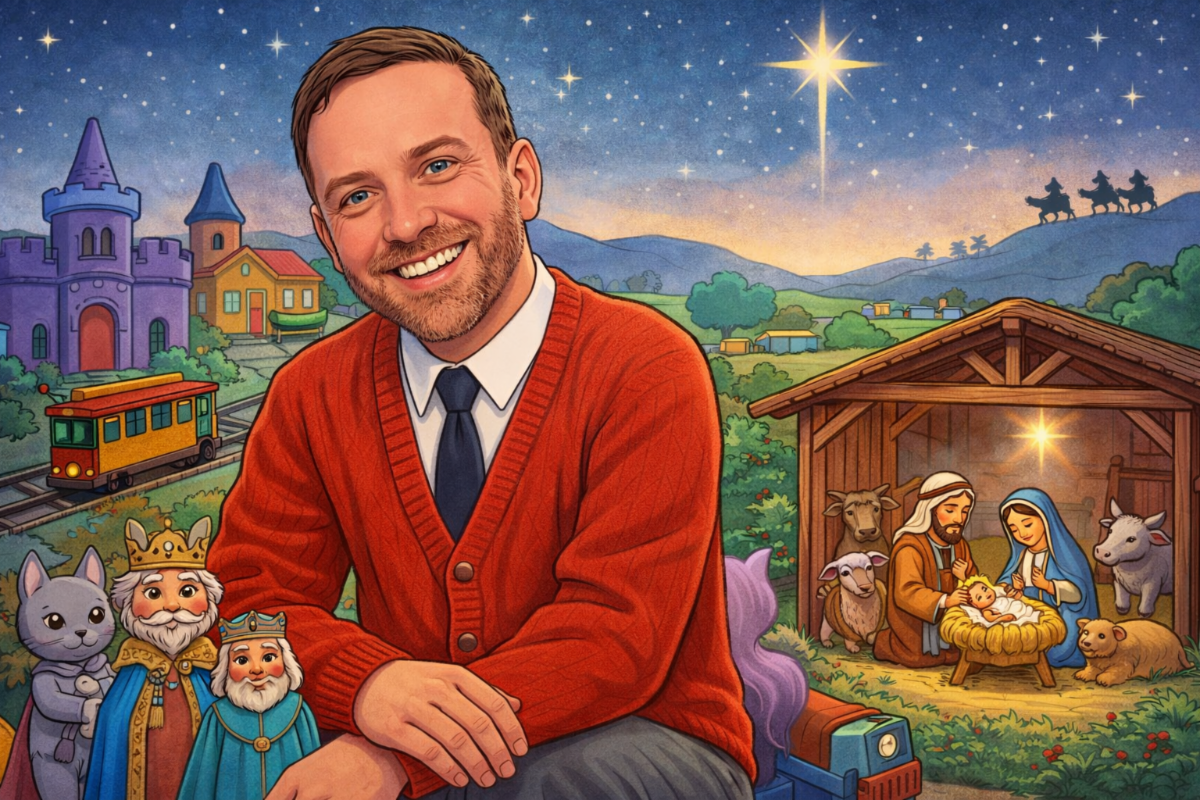
The Reverend Fred Rogers—better known as Mr. Rogers—was once asked why his television show had such a lasting impact, why children—and adults—felt seen by it in a way few programs ever managed. His answer was simple.


He said that whenever someone came into his studio—child or adult, guest or stranger—he tried to imagine a sign hanging around their neck that read:

Please do not judge me.
Please try to understand me.
I am doing the best I can.


And then he said something even more striking.

He believed that the greatest gift he could offer another person was not advice, not correction, not even answers to life’s big questions…
The greatest gift he could give was his presence.

Because when someone stays long enough…
listens without rushing…
refuses to abandon another to fear or shame…
something quietly but permanently shifts.

When someone shows up for us in this way…

We begin to breathe differently.
We begin to trust.
We begin to hope.

We feel connected.

We feel seen. 

It is yes, a human interaction, but it is also divine.


When someone honors us in this way, it is as though the interior mansions of our lives—our very souls—begin to be remodeled.
The furniture gets rearranged.
New space opens up within, between, and among us.

Not so that we will have more capacity—
but so that God might dwell with us… within us. 

That God and we might dance together… living not just around each other, but with one another.


Tonight, we celebrate not a passing presence, but a dwelling one.
On this Holy Night, we remember that God did not create the world, then retreat from it.

On Christmas Eve we marvel at the truth:
God came close.
God made a home among us.
God moved into our neighborhood, 

And asked, won’t you be my neighbor?


The Gospel writer Saint Matthew picks up the Prophet Isaiah’s divine name for our God-turned-neighbor calling Jesus—Emmanuel meaning: God-with-us. 


How and where did God-With-Us choose to be our neighbor?

Returning to our Gospel lesson for tonight, Saint Luke is clear: God did not enter in myth or legend, but in the middle of history.

Note the details:
A census.
A journey.
An occupied people.
A world where power is held tightly by the few…

Messy and much like our own day.


Isaiah names this reality plainly: darkness.
Not just night, but despair.
Not just fear, but exhaustion.

And into that world—not a perfect one, not a healed one, not a deserving one—into our world, a child is born.

Not in a palace.
Not behind walls of protection.
Not at the center of wealth or influence.

But in a place meant for livestock (our equine and bovine neighbors).

God-With-Us arrives in complete vulnerability.

And friends, that is a crucial ingredient in the miracle of Christmas.


But, it’s not all of it. For elsewhere in Holy Scripture, we read something else essential about God’s entering into our world.
In the First Letter of John, we are told plainly: God is love.

Which means that if God is love,
then God-With-Us is also Love-With-Us.

Not as a feeling.
Not as an idea.
But as a person.

Jesus of Nazareth, the Christ, the Messiah, the Savior and Redeemer of the World.


John will later put it more poetically:
The Word became flesh and dwelt among us.

God-With-Us did not hover at a distance.
Love-With-Us stayed with us.

However, if you follow the story long enough…


You may wonder, But Seth what about the Ascension? Didn’t Jesus leave then?

As we remember, God coming to be with us, it’s only good and right to also ponder what about when God seemingly left us.
And here our siblings in Orthodox Christianity offer a striking legend.


This old story from the Church of the East imagines that as the risen Christ Jesus ascended into heaven, the apostles—still afraid of being left behind—reached out and clung to him. They held onto his feet. And as Christ rose, they held onto one another, forming a living chain between earth and heaven.


As they climbed higher and higher, Christ Jesus did not shake them loose. I think that is because in the Incarnation, God brought heaven to earth—making ordinary human life holy, and in the Ascension, Jesus forever bound earth to heaven—not by leaving us behind, but by drawing our very humanity to the right hand of God the Father, into the very Divine life of the Trinitarian Community.


Even the Ascension, then, is not a story of departure, abandonment, or absence. It is a story of communion.


This means that tonight, we do not simply remember a birth. We proclaim an eternal presence. 

God-With-Us is here. 

God-With-Us has always been here. 

God-With-Us will not abandon us.


And in a few moments, that same God-With-Us will come to us again—
not as an idea to be considered,
not as a metaphor to be decoded,
but as bread and wine.


Ordinary elements.
Everyday food.
The kind of things that sustain life and mark celebration.


And in them, God reminds us that divine presence is not reserved for mountaintops or holy moments alone,
but is woven into daily nourishment and quiet abundance.

Even now, God is choosing nearness…

Still choosing to dwell with us—
hidden in plain sight at this table, yes…
and revealed again and again in the world we inhabit.


God-With-Us meets us in the faces of friends and family,
in the love of those seated beside us,
and in the tenderness we offer and receive.


God-With-Us also resides in the stranger who needs our care,
in the neighbor who carries a burden we cannot see,
and yes—even in the one who challenges us, resists us, or stands opposed to us.


Because God-With-Us is not only among us—
Love-With-Us is within us, all of us.

The same God who called creation into being,
the same God who holds all things together,
is here—
now—
with and within each one of you, each one of us.


So, hear the good news of this Holy Night:
You are not alone.
You have never been alone.

And God will reside with you forever. 


For we have an attuned God loving us.

We have the gift of God’s divine love within us. 

We have within us an everlasting spring of a Love so abundant that the heavens could not contain them on their own…

So, Love spilled over forming and inhabiting all of Creation…

Because God eternally gives not only divine presence—but also stays with us in an everlasting relationship…
Staying, abiding, refusing to leave—that is who God is.


And, when Christ Jesus came among us, we were given another sign to hang around our necks. This one reads:

God loves me. 

God understands me.

God knows I am doing my best.


For God is with you in your joy and in your weariness,
in your hope and in your doubt,
in this moment and in every moment still to come.


God-With-Us came to be in relationship with you and with us. Love-With-Us came to dwell among us—and never left. 

Emmanuel has moved into the neighborhood, and he is wondering: 

Won’t you be my neighbor? 

Won’t you be one another’s neighbor?

Sunday, December 24, 2023

God Wants Into Your Life!


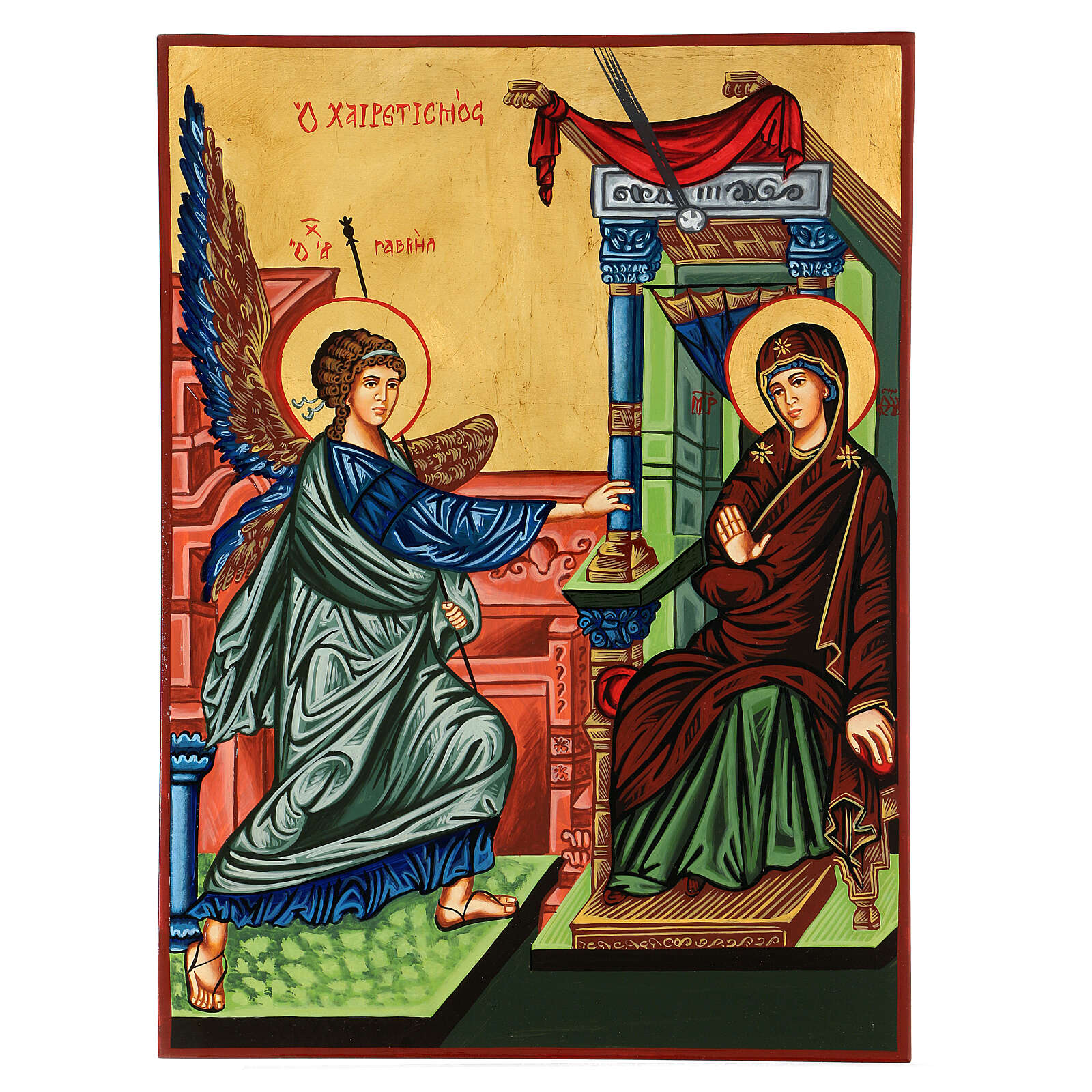
An Icon of the Angel Gabriel visiting Mary


2 Samuel 7:1-11, 16

Canticle 15

Romans 16:25-27

Luke 1:26-38

©The Rev. Seth Olson 2023

It is tempting to overlook the Fourth Sunday of Advent and this story of Gabriel visiting Mary. In the case of this Gospel lesson, perhaps that is because we hear this story so often, or maybe it’s because we are already focused on Jesus’ birth, or it could even be that we are distracted by the many things clamoring for our attention on Christmas day.

It’s also tempting to ponder some odd things about Mary—thinking too highly of her—that she is a god herself—or too lowly of her—that she was only acting under God’s control. These temptations might lead us down some difficult paths: idol worship in the former case or viewing God as a coercive puppet master in the latter case. It might be that we don’t believe in the supernatural at all—Angels? Virgin births? Come on! But, even if we hurdle these temptations—boredom, idol worship, vilifying God, and believing in the unbelievable—there is one more temptation surrounding this story.

As we listen to this all-too-familiar tale, if we are to hear it, believe it, and take it seriously, we may still relegate its power by thinking that this was the type of event that only happened far away and long ago. While all of these temptations teeter on the edge of danger, this last belief may very well cause us the most damage: God merely intervened in ancient human history—centuries back, half a world away. This isn’t illogical.

When we look around at our world, we can easily think that God no longer meddles in human affairs. At this time of year news outlets publish their most noteworthy stories of the last twelve months. One does not have to scroll through many to see some devastating trends: deadly wars, political gridlock, abuse scandals, environmental crises, and the threat of existential annihilation. This does not even touch on personal challenges such as crumbling relationships, debilitating diagnoses, financial hardship, substance abuse, or mental illness. When reading today’s Gospel lesson through the lens of our corporate and individual lives, no one would blame us for believing that God entered human history long ago and left the chat around the year 33 such that we humans have created the mess in which we currently persist.

And, so we may rightly wonder: Why did you leave us, God? Where are you in all this? Won’t you help us to make this world more like your dream and less like the nightmare it often is?

As you ponder these questions, I invite us into trying something different. Let’s step back from this familiar story, and use our imaginations to hear this story of God and Gabriel and Mary with new ears, so that we might hear something new, which leads us not into ancient story, but into something happening right now. If we delete the search history in our minds about this story, maybe we will hear it speaking to us directly.

Listen to the following and notice if it sounds at all familiar: a crumbling world, a people yearning for something more, and a lowly individual. All this checks out, right? It sounds like my life. Add in one final piece—God who is so in love with the created universe that instead of sitting on the sidelines the Divine enters into the story, not to control it, but to have compassion—that is to suffer with us. Friends, this is not the story of long ago, this is the story of right now. God intervening in the life of Mary points to God coming into the lives of all humans throughout time. This is so much more than just an unusual tale we tell at this time of year.

Back long ago the hope of the People of Israel had been clearly articulated for not just centuries but millennia: a Messiah who would come to set all people free—The People of Israel AND the People of Palestine, Jews and Gentiles, all people! However, if one waits long enough for something without it happening one may very well start to believe that even though something was promised it will never happen—at least not in one’s lifetime. Not only this, but during Mary’s day Israel struggled through a difficult, if not unfamiliar, predicament.

Once again, another nation ruled over Israel. Like during Assyrian and Babylonian captivities before, the anticipation of salvation via a Messiah may have been a stated hope, but it certainly did not appear a likely scenario. And yet, under Roman occupation God chose to intervene in human history—even in a moment when it was a great hope, the infinite becoming finite was completely unexpected. This is not just history though—it’s the current reality.

Now, in this uncanny year when the Fourth Sunday of Advent is also Christmas Eve, it would have been easy for us to overlook all of this, in favor of prematurely moving to the manger. But, how can we celebrate God entering into this world at Bethlehem without the story of Nazareth? It would be like viewing the empty tomb without the last supper, the betrayal, and the crucifixion of Jesus during Holy Week. Yes, we are going to time travel a bit and go through nine months of Mary’s pregnancy by the 11 o’clock service. And yet, in this moment we are still walking through the Advent Season, as we anticipate, wait for, and even expect the Coming of Christ. In Advent we remember Christ fulfilling the law and the prophets through Jesus, we look ahead to Christ fulfilling all things at the end of days, but with all this looking around we might just miss what Christ fulfills right now.

Mary’s story provides us the key to unlocking a glimpse of God entering into our reality in this moment—even if things seem so dire or bleak. Mary trusted that a Messiah would come. She understood that God would make all things whole. Her song the Magnificat gives us a glimpse into her heart and her hopes. She yearned for those things for which God yearns, the lowly becoming exalted and the exalted becoming lowly—the hungry fed and the full sent away empty. And yet, she believed all of this against the backdrop of war, destruction, oppression, inequality, and illness around her. Does this sound familiar?

One of those most basic calls that we hear during this season of Advent is something Mary models for us: Slow down, be quiet, and listen for God. God promises to come back to us. God tells us that Christ will come again. God bids us to keep awake. Still, somehow we manage to create in our lives more and more opportunities not to listen. It’s like we are people who do not want to hear any spoilers from the newest binge-worthy show, and so we run around with our fingers plugging up our ears, yelling, “Lalalalalalala!” Except, this is not a Hollywood plot we are missing—it is GOD!

Mary gifts us with a template for unstopping our ears, removing the scales from our eyes, and experiencing God intervening in human history right now! Before you think that you are not like Mary—think again. Mary was a female in an age that saw women as property, she was lowly. Mary was related to a temple priest and betrothed to a man from the royal line of David, she was powerful. She was faithful and yet she questioned the messenger of God. Mary was a human being—complex and complicated—just like you and me.

When God sent Gabriel to her though, she had a choice. God did not coerce her into being a hapless vessel of His bidding. Even through perplexity and questions God invited Mary to bear the Divine into humanity. God’s omnipotence became particular in Mary. God’s almightiness became vulnerable in the womb of Mary. God’s infinite love became enfleshed within Mary. This is not simply about Mary having a baby—it was about her bearing Christ into this world, something all of us are called to embody.

At a time when everything appeared dark and lost God chose Mary to bear the Savior of all things into this world. We know through the Gospel that Jesus’s life, death, and resurrection rerouted existence forever; however, God did not stop moving then. As soon as God chose Mary and Mary chose God all of humanity began to shift. We have not fully realized this transformation yet, but even now God is on the move. In Mary’s yes God inaugurated a reign that sanctified even the most lowly and mundane of human occurrences. The life of Jesus, which made all things holy began with a woman saying, “Let it be with me according to your word.”

God wants into your life to bring healing and health, salvation and sanctification, mercy and grace, transformation and reconciliation, peace and love. Like a momentous earthquake God shook Mary’s existence, but those shockwaves crash throughout our lives too. Will we notice God coming into our lives? Will we hear God’s message saying, “Greetings favored one! The Lord is with you.”? Will we say with Mary, “Here am I, the servant of the Lord: let it be with me according to your word.” God yearns to dwell with us, to heal this hurting world, and to make this life more like the dream it can be instead of the nightmare that it often is.

Even if the following is hard to believe, may this be the last and perhaps most important thing I have ever said from this pulpit: nothing will be impossible with God!