Showing posts with label Music. Show all posts

Monday, May 6, 2024

Give Me Your Unconditional Love

Did you know the classic tune from Camp McDowell is a Donna Summer almost hit?


Acts 10:44-48

Psalm 98

1 John 5:1-6

John 15:9-17


 © 2021-2024 The Rev. Seth Olson


This sermon was preached at the Episcopal Church of the Holy Apostles on Sunday, May 5th and video of it may be found here


The title track off of Donna Summer’s 1983 album She Works Hard For The Money was a huge hit. It topped the Billboard R&B chart for three weeks and reached #3 on the Billboard Hot 100. It remains one of Summer’s most well-known tracks, played around the world and streamed tens of millions of times.


The second single off that same album was a commercial disappointment, only reaching #43 on Billboard’s pop list. I am sure Summer and Mercury Records were upset by the lukewarm reception of this track. However, the late Donna Summer would be happy to know that the youth of our diocese love this song, which is entitled, “Unconditional Love.” If you have been around a diocesan youth event, you may have heard it: 


Don't take too long to find

True love transcends all time

That non-reacting, everlasting love


Give me, your unconditional love.

The kind of love I deserve

The kind I want to return.


Until a few years ago, I had no idea of the genesis of this classic camp hit. My friend and fellow former associate rector at All Saints, Charles Youngson, revealed the original singer of this song, and I was so confused. “’Unconditional Love’ was sung by Donna Summer? Like, ‘Bad Girls’ Donna Summer? ‘Last Dance’ Donna Summer?” After googling and going on Spotify to make sure Charles had not lost his mind, I explored a little more. 


Discovering that this song had a less than stellar reception amongst critics and radio listeners alike actually did not surprise me. We prefer to put our energies into working hard (for the money) instead of receiving and giving unconditional love. This is true not just about Donna Summer’ songs, it is true throughout life. Of course, we in the Church love love.


We love talking about love. We love putting love in our mission statements—“At the Episcopal Church of the Holy Apostles, our mission is to… love Christ in every person”—but what do we really mean by unconditional love, transforming love, or in the Greek agape? Jesus in today’s Gospel lesson gives us some clues as to the immensity and the difficulty of participating in God’s love.


“As the Father has loved me, so I have loved you; abide in my love,” Jesus told this to his disciples on the night before he died. Sometimes we believe that God loves us because God is Our Heavenly Father (or Mother or Parent depending on your piety). However, that is getting things backwards. As a beloved friend once preached, “God doesn’t love us because God is our heavenly parent. [God] loves us because that’s who God is, and it is the love that God has for us that makes us God’s children—not the other way around.”[1]


Think about it this way, most of us probably believe deeply that we love our grandparents and parents, our children and grandchildren no matter what. We may even strive to practice unconditional love with them, so that when they hurt us profoundly, we still come back with the same unabashed affection. This is wonderful, and it’s another form of love, sometimes referred to as storgÄ“ familial love. Jesus was calling his disciples (and us) to abide in this agape love. This sounds great, but what does this love look like?


Agape is revealed in keeping Jesus’ commandment. What was Jesus’ commandment? To love one another as he loves us. [puzzled look] Okay, I know. This is as though we are walking through an M.C. Escher painting in which we reach the top of the stairs only to realize we are back at the bottom. Jesus’ words are a bit circuital. He essentially says: “Love one another as I have loved you. Do this by abiding in my love. You will know that you are dwelling in my love if you follow my commandments. What are my commandments? Oh wait, there’s just one and it is to love one another.” Oh, Jesus!


This snake eating its tail sort of logic is frustrating; however, digging deeper into what Jesus meant by this love may leave us even more frustrated, or at least more challenged! After Jesus told his disciples that his commandment was to love one another he gave them a real-world example of this: “No one has greater love than this, to lay down one’s life for one’s friends.” We sometimes bypass these words too quickly, so let me read them again, “No one has greater love than this, to lay down one’s life for one’s friends.” Jesus not twenty-four hours later lived these words out—or perhaps better said, he laid his life down to prove these words perfectly true. 


How do we even attempt to live into this sort of love? That same friend I mentioned earlier also pointed out that there are two surprises within these challenging words.[2] The first is right in front of us: Laying down one’s life for another is not simply an act of ending one’s mortal life. 


Another sort of “martyrdom” exists. We celebrate this example in the Church Calendar when we put up white liturgical hangings for Saints’ feast days. These Saints did not die because of their faith, instead they lived for it. In the musical Hamilton the character of George Washington put it more simply, “Dying is easy, living is harder.” John in a passage from his First Letter that we read a few weeks ago expanded this concept even further. When we sacrifice resources, we would otherwise use and give to God’s work in this world here too we are laying down our lives. So, this is the first surprise—the agape love of giving up ourselves is not just about death, it happens any time we sacrifice for God’s work in this world.


The second surprise is undetectable in our English translation. The sentence “No one has greater love than this, to lay down one’s life for one’s friends” is much more interesting in the original language. The word for friends is philos and there is a specific type of friendly or brotherly love in the Greek, it’s philia (see: Philadelphia, the City of Brotherly Love). So, is that what Jesus said? NOPE! Jesus used another word for love, and it is—you guessed it—agape


Why is this important? It would have put those listening to this Gospel on notice. To truly follow Jesus’ commandment, to abide in him, to be his friend is not about brotherly love—love that is complementary or a mirror response to how someone else treats us. Instead, it is about agape—that non-reacting, everlasting love. Alright, again this all sounds nice, but what’s this look like, laying down our life for someone else? For example, how do we live in love when we have conflict with someone else? Well, how did Jesus live or as the famous bracelet asks, “What would Jesus do?”


Jesus was not a doormat. He was not a pushover. He pushed over tables in the Temple. He told people no. He even said to his own family, you are not my family—those who do my Father’s will are. He stopped healing people in one town, so that he could share his message elsewhere. He paused for prayer. He loved his enemies, but by challenging them. And in these and many other ways, he showed us an example of being “boundaried” in our approach to dwelling in God’s love and sharing it with others. Jesus set limits even as he expressed God’s limitless love. 


So, maybe living in agape is not so much about being pushovers, running ourselves ragged, and completely exhausting ourselves, but instead it is about finding times and places to fill our cup with God’s love, like Jesus did in prayer. So that then, that love overflows from us to others, like Jesus did in truly seeing and healing others. And yes, God calls us to give sacrificially of ourselves, but in ways that enrich our lives and others—not just for the sake of suffering. Jesus did not die just to die, he died so that we may live in love. 


Remember you are a beloved creature of this love, and not a robot that can work without rest and restoration. God’s love is not an invitation for others to take advantage of us or hurt themselves. God’s love is not a mythical “perfect love” that does not exist in real life.


God is always more ready to give us this gift than we are to receive it. Some moments we will dwell in this love and it will emanate from us to others. Other times we will be broken vessels that leak the little bit of agape we feel like we have inside. In all these moments may we not shame ourselves or tear each other down for that only prevents us from seeing God’s way of love.


In the life, death, and resurrection of Jesus, the Christ, we see this way: 

-the transfiguration of human weakness by God’s strength 

-non-reacting, everlasting love as a response to violence

-the trappings of death gone and the tomb empty


In this way, may we sing with Donna Summer and the youth of our diocese:

Give me, your unconditional love.

The kind of love I deserve

The kind I want to return.


And when it feels hard to return that love to those with whom we disagree or have conflict, may we rely upon God to sustain us, as we set good boundaries, trusting that in the end God’s resurrecting love will make us all one! Amen. 


[1] Evan D. Garner, “To Love As We Are Loved,” [http://evandgarner.blogspot.com/2018/05/to-love-as-we-are-loved.html, posted: May 6, 2018, accessed: May 5, 2021].


[2] Garner, “To Love As We Are Loved,” [http://evandgarner.blogspot.com/2018/05/to-love-as-we-are-loved.html, posted: May 6, 2018, accessed: May 5, 2021].
Sunday, October 8, 2023

Murder or Chocolate: You decide!

When God shows up in our lives how are we responding?


Isaiah 5:1-7
Psalm 80:7-14
Philippians 3:4b-14
Matthew 21:33-46


©The Rev. Seth Olson 2023


Holy God, let my words be your words and when my words are not your words, let your people be wise enough to know the same. Amen.

Last week, my wife Kim told me that we had lost a library book our son Teddy had checked out. After looking through the stacks of board books, paperbacks, and hardcovered stories on our boy’s shelves, we determined that either A) the book is in an alternative universe, B) our dog Chloe secretly ate it, C) we have legitimately lost the copy, or D) we turned in the story, but somehow it never got checked in properly. Now, I kind of hope it’s A) and not just because I’m intrigued by the concept of a parallel multiverse, but I honestly lean towards answer D) that we turned the book in along with a couple dozen others, but it got lost.

In truth we have paid heavier library fines within the last calendar year than we will in purchasing this particular book, so it is not a huge deal to ante up a little cash to support our amazing city. However, there are times when I take for granted the things that have been loaned to me. Yes, I can go on the library website to see which books, videogames, audio books, boardgames, tablets, etc. I have checked out, but it’s easy for my mind to slip into a place where I start to believe some more important things belong to me when they were never mine in the first place, which sounds a little like what we just heard from Matthew.

It would be wild for me in the case of the library book we cannot find, Lego City: Work This Farm, to take the lead from today’s parable. It would be crazy for me to receive a notice from the Jefferson County Library Cooperative and to choose violence. It would be insane if when told by a library worker I needed to return what was not mine, if I then reacted by killing that employee, or setting ablaze the highly flammable tinder that is a stack of fantasy fiction.

The logic outlined by Jesus in this parable and exemplified by the tenant farmers seems to allow for me to walk into the Homewood Library and threaten the kind workers at the circulation desk with murder if they ever asked about an overdue item. Not just this, but I should take control of the branch as my own personal bookshop to be defended with aggression. All of this sounds so absurd exiting my mouth in a sermon—it’s in the Gospel, but it is not good news, is it? It sounds more like the content of a violent fantasy novel or a scene from The Godfather than good news. And yet, here it is in Matthew’s telling of Jesus’ story.

These words were proclaimed by Jesus to Temple leaders who were quizzing him about his authority. And, this encounter transpired during the last week of Jesus’ earthly ministry in the lead up to the Passover. Thus, this story occurred in an overwhelming intense setting. But, what was Jesus truly saying? The owner of a vineyard sent in his chosen workers, then his son to collect the property-owner’s part of what tenant farmers and the land had produced, but the leaseholders bloodied and murdered those servants and his son. Why? To send the message that they were not going to give back what they had been given! This is not compassionate, loving, or sane. Who would do such a thing?

We would! We do it every single day, and not just when we forget which books are the library’s. Sure, we don’t let others see this sort of behavior. We don’t treat our friends and neighbors like this because of social pressures, social ridicule, and social media, but make no mistake—this story of the wicked tenants is not only about the Temple leaders of long ago—it’s about us too.

We have been given so much! Time, talent, and treasure; gifts, abilities, and skills; the earth, this country, and the Church too. What do we do with all these things given to us? Often, we hide them away with the blinds shut. As one of my favorite priests, the Rev. Evan Garner, once preached on this text:


We horde the things that God has given us, pretend they were ours to begin with, and keep the fruits of our labors for ourselves. All of our skills, abilities, resources, and opportunities belong to God, yet we begin almost every encounter by asking what’s in it for us. All of the love, affection, loyalty, and trust that we enjoy come from God, yet we would rather hold on to them than give them away. Our greatest gift, the freedom to choose whom we will honor with our lives, is handed to us by God, and we choose to turn inward and seek self-satisfaction instead of devoting ourselves to our creator.[1]

We start thinking all of this is ours—our church, our families, our lives. We put in some hard work—we really do. It is not easy in the vineyard. The sun beats down. The ground hardens. The sweat pours. The weeds have thorns. The body aches. So, the fruit that is born—we believe, it’s ours! We produced it. Even if those holy ones of every age cry out reminding us that no one is an island and none of us made ourselves.

We think we were left alone in this vineyard a long, long time ago. Even when prophets point towards the legitimate landowner, we get lured in by our own siren call to keep the wealth, to get what is ours, and to keep earnin’ baby! We believe it’s all ours—if not in our minds, then with our actions. Despite this, God decided to do something wild. God became incarnate to be with us. Even observing this very human tendency to see the world around us as belonging to us, God chose to send His Son into this mess.

Yes, as absurd as this parable is, what is even crazier is that God would see the selfish tendency, especially among religious folks, to horde power and to attribute God’s gifts as their own—God would view this and still become incarnate. Even knowing how absurd we are—God still was pleased to dwell with us.

In the Incarnation of God through Jesus of Nazareth we discover this hard-to-understand truth. God yearns to be with us—even in our selfishness, even in our self-centeredness. And in doing this God does not condone our lunacy, but nonetheless God makes holy the mundane. The secular becomes sacred. In Jesus’ incarnation we are reminded of the original incarnation—that is creation. In Creation, God made everything. In Incarnation, God redeemed everything. In the age of the Spirit (from Pentecost onward), God is in the process of sanctifying everything. And yet, we strive—sometimes intentionally to forget this—that God has given, has redeemed, and is sanctifying everything!

When Jesus came, he pointed to what had always been true. Everything is God’s. All of Creation belongs to God. The whole vineyard is God’s! All time and space too. Sure, we happen to be in stewardship season, but it is always true—everything belongs to God. Time, talent, and treasure… your life, your family, and your money. Some churches talk about tithing, that’s nice and all, but that ain’t it. God doesn’t want 10 percent of anything—God wants it all. This is scary, right?

One of my favorite bands, Spoon, released a song earlier this year entitled, “I Can’t Give Everything Away.” It’s right on the tip of our cultural tongue. We become creatures of comfort and convenience, and it’s hard to let go. In the glossy sheen of social media posts, we see the lifestyle of others beaming, we see the ads for the next thing to make life easier or better, and we strive to keep up with the Joneses. Underpinning this pursuit of besting one’s neighbors is the belief that right now, life is not enough.  

We buy into scarcity—that there won’t be enough, that we aren’t enough, and that something, someone, or some position will somehow make us enough. This ain’t it baby.[2] St. Augustine wrote the following way back around the year 400, but it still rings true: “You have made us for yourself, O Lord, and our heart is restless until it rests in you.”[3]

Now, you might be wondering, “Okay, Seth, this sounds nice and all. I want to be able to rest in God, but how?” Well, first recognize that the vineyard isn’t ours. The vineyard of our life, our family, our church, our world… we are caretakers of them all, stewards of the gifts given to us, but everything belongs to Our Creator. Next, see the world not through the lens of scarcity displayed in our overly consumeristic culture, but through the lens of God’s abundance. That preacher I love said it this way, “We have everything we need to make this world the way that God dreams it could be—the wealth, the opportunity, and the freedom—but we’ve been borrowing all of those things for so long that we’ve forgotten that they don’t belong to us.”[4] They never did. What we have been given is not ours and it certainly will not be ours when we are called home, so we can start now in practicing the art of giving it all away right now!

What I am saying might make you feel uncomfortable or even mad, but if you have been viewing stewardship as a fundraising tactic that we use to keep the lights on, then I am sorry—we in the Church have not been clear enough, which brings me to my final point about how our hearts will rest in God. Stewardship is a spiritual practice meant to remind us of the ultimate truth—everything is God’s and you and I are not God. We begin in God we end in God, but this middle bit is up to us. Are we going to pretend that this is our vineyard or are we going to give back the produce that belongs to the one who created it all?

There’s an absurd cartoon (see the top of this post) that helps to make the point that we have a choice in how we respond to God coming into our lives. It’s funny if a bit of gut punch—maybe like this whole sermon. An alien has landed on earth and is talking with an earthling about Jesus. The alien says, “Oh, he comes back every two weeks or so. We gave him this big box of chocolates when he first arrived. Why? What’d you guys do?” To which the earthling replied, “Uhh…”[5]

It's all God’s. Are we going to respond to that truth with murder or are we going to respond with chocolate?


[1] Evan D. Garner. “Only This Gift Can Break The Cycle” from A Long Way From Home Blog. (http://evandgarner.blogspot.com/2017/10/only-this-gift-can-break-cycle.html, published October 8, 2017, accessed October 8, 2023).

[2] Jason Isbell, “This Ain’t It” from Weathervanes, released June 9, 2023.

[3] St. Augustine of Hippo, Confessions. (New York: Doubleday, 1960).

[4] Evan D. Garner. “Only This Gift Can Break The Cycle” from A Long Way From Home Blog. (http://evandgarner.blogspot.com/2017/10/only-this-gift-can-break-cycle.html, published October 8, 2017, accessed October 8, 2023).

[5] Zach Weinersmith, “Well The Good News Is That We Found Out Jesus Is Worshipped On Other Planets.” From Saturday Morning Breakfast Cereal. (https://www.smbc-comics.com/comic/2008-11-24, published November 24, 2008, accessed October 8, 2023).

Wednesday, July 24, 2019

The Answers Are Getting Harder: Shamelessness in Prayer

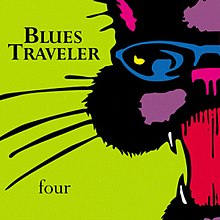
Album art from Blues Traveler's fourth album Four.

The first CD I ever purchased on my own was the 1994 Blues Traveler record Four. I loved that album, and still listen to it regularly. While the singles “Hook” and “Runaround” garnered much of the attention, I devoured (and nearly memorized) all the tracks of the hour long recording. As I have been preparing for preaching this week, I found myself mysteriously singing the second song from Four, a track entitled “Stand” (You are going to want to listen to it before continuing... do so here).

For the first two verses and refrains of the song, the lead singer John Popper makes a series of declarative statements, which lead to the theme that sometimes in life it’s a long way to fall. These statements are almost universal beliefs that we as humans hold subconsciously—beliefs like talk and tragedy are cheap, wounds heal in time, and decisions we make come back to us in one way or another. Right before the two-minute mark of the song though something shifts. Popper begins an intense harmonica rift that gives way to a calmer and more transcendent sounding harmony from the rest of the band. It’s at this point in the song when I realize why my subconscious spit out this tune during this particular week.

As the harmonized vocals return, the band sings, “The answers are getting harder.” This feels like the most accurate depiction of our current state of complicated existence in this polarized world of have’s and have not’s. Sure this song is turning 25 years-old this September, but the words that John Popper wrote for Blues Traveler’s fourth album remain as true as they were in the mid-1990’s. The answers are getting harder. And, the band repeats this statement three times before adding another belief in the background, “If an answer comes to those who pray.” What could this possibly mean?

Taken together these statements read, “The answers are getting harder if an answer comes to those who pray.” To me this means that even in our practice of conversing with God as we grow the answers become more complicated. Perhaps this is a belief that Popper discovered as he matured in his life as a musician and a man. The real power and a true connection to this Sunday’s Gospel lesson from Luke 11 comes in what happens next in the song.

At the 3:45 mark the tempo increases and Popper sings:
“The answers are getting harder and harder
And there ain’t no way to bargain or to barter
But if you’ve got the angst or you got the ardor
You might faint from the fight but you’re gonna find it
For every challenge could have paradise behind it
And if you accept what you have lost and you stand tall
You might just get it back and you can get it all
So now you know why it’s a long way to fall
Yeah cause it’s a long way to fall.”

While it’s not explicit if Blues Traveler is referring to the act of praying and receiving answers, the implication is clear: persistence in prayer and in life will carry you through challenge, loss, and even falls. Taken in concert with this Sunday’s Gospel lesson this song pushes my own understanding of Jesus’ response to how one ought to pray.

In Luke 11:1-13 Jesus uttered the familiar words of the Lord’s Prayer, but he also offered up a teaching about our posture during prayer. No, I’m not talking about standing or kneeling, I am referring to the vigor and persistence with which we pray. In Luke 11:6-8 we hear Jesus describe a persevering neighbor knocking on his friend’s door in the middle of the night. The man inside does not want to give this pesky neighbor any bread for he’s already in bed with his kids asleep. Still he does get up and give into the request because of the friend’s persistent knocking—not because of their preexisting relationship. Some take this to mean that we are to persevere in our prayer and life—and I agree—however, there’s more here, and it relates to what Popper sang about in “Stand.”

A more honest translation of the word we quote as “persistence” in Luke 11:8 is actually “shamelessness” or “importunity” or “un-modesty.” The knocking neighbor has no shame in asking, which is a very different thing than being persistent. In truth this unlocks a completely different way of viewing God. God’s not waiting on us to be persistent in our prayer life before God grants our requests. Rather, we are to have no shame in asking boldly for what we want, laying our entire lives for God to view, and pushing onward for our will, as we allow it to fall in line with God’s own will.

This shamelessness insight dovetails nicely into what Popper sang. As the answers to our prayers and in our world become harder and harder, there’s no way to bargain or to barter with God for a reply. Instead as we express our anxiety and passion to God we are to without modesty share our entire existence with Him/Her/Them. As we bear our entire souls to God we might faint from the fight (see: Jacob wrestling with God in Genesis 32), but as we persevere we discover heaven on earth right within/beyond our challenges. Accepting the losses of life, instead of denying their existence, allows us to stand within our truest selves and like Job we get back not what we had but something even greater. So, while we pray that God lead us not into temptation, the truth is that God guiding us through the evils of this life leads us into a promised land. This paradise is so fathomless that it exceeds our imagination. Even now as we pray shamelessly to God, nakedly laying out our entire selves open to the one who knows us entirely, we dwell in the intersection of heaven and earth with the one who creates, feeds, forgives, sustains, and loves us completely.

So, when you pray stand tall as you boldly lay bare your whole self to God. It is not about the words you utter, but the posture of shamelessness you invoke. For God will never shame you (see: Old Testament lesson from Sunday Genesis 18:20-32)—so ask emphatically for what you want. And while God may not answer precisely how you desire, know that beyond and even within the challenges of life God is bringing heaven to earth, as God’s will is always done. Stand, stand and walk with God.

Wednesday, January 2, 2019

New Name


January 2, 2019—Transferred Feast of Holy Name

Do you have a good nickname? What about growing up? Did you have a name that only your family or close friends called you? I marvel at how these names sometimes stick. Kim and I call (our son) Teddy by many different, ridiculous names. For example, we started off calling him bubby, but that quickly got shortened to bub, then it got lengthened to bubs, and now I often call him the bub-i-nator! What about you? Do you have a ridiculous name? Do you have nicknames for those closest to you? A What about a profound name?

How about with God? What does God call you? By what name does God call you?

There’s a hymn within the Alleluia III Hymnal entitled “I Will Change Your Name.” It is a favorite within the Cursillo community of Alabama. The lyrics in that song speak powerfully of conversion. Just take a listen:

“I will change your name.
You shall no longer be called
Wounded, outcast, lonely or afraid.
I will change your name.
Your new name shall be
Confidence, Joyfulness, Overcoming One,
Faithfulness, Friend of God, One who seeks My Face.” 
(D.J. Butler, 1987 Mercy/Vineyard Publishing)

Wow! In this song, God is committed to changing our names. Instead of us calling ourselves wounded, outcast, lonely, or afraid; God will change our names. But, why does this matter? Well, it matters because what we call someone matters. And, more importantly what God calls us matters. The Genesis 1 Creation Story tells us that when God speaks God creates. So, what God calls you matters, which is why what God called His Incarnate Son mattered too—and it’s why we celebrate the Feast of the Holy Name (transferred to) today.

In Luke’s sharing of the Good News of the Christ, we discover early on that God, the Father, is going to have an idle role in the proceedings. Via angelic messengers God bends the ear and the heart of Mary. She learns from Gabriel that she will bear God’s Son, and that this child will be the Son of the Most High God. Additionally, she discovers that she shall call him Jesus—and His Kingdom will have no end. But, what’s with this name? Why does it matter? Couldn’t he have been called Billy Joe or Steve?

Often we forget that Jesus’ name was not really Jesus. It was, but it wasn’t. Jesus is a Romanized version of a Hebrew name—the name Joshua. Jesus’ name would have sounded like Joshua in His own day. What’s so important about this? Well, Joshua means “God has saved” or “God will save.” When Mary heard that she was to name her child Joshua she was learning that through this child God would save humanity. I think it’s tough being a parent to Teddy—I can’t imagine what Mary must have felt in that moment, but I digress. Mary and Joseph naming their child Joshua might not seem like a big deal now, but it was.

On the eighth day of his life Jesus/Joshua would have been circumcised, as a marker that he was part of God’s People. Then, he was given his name, which was both a way of giving him his identity, but also for his parents it was a way of taking part in the creative act like God speaking things into being in the creation stories of Genesis. God’s naming Joshua/Jesus such was pointing to what this child from Nazareth came to show us—that God saves. What about our own names? What do they show us?

You may not know what your name means. That’s alright, you can always google it. My name in Hebrew means, “the chosen,” but in Egyptian means, “the devil,” so it could be a mixed bag. Rather than getting caught up in what you are named now, perhaps it’s time to ask God what your new name might be—like what those song lyrics tell us. Through Jesus/Joshua of Nazareth who was the Christ we know that we have been shown the pathway to healing, wholeness, and salvation. God is calling us to walk that pathway of life.

From being wounded, outcast, lonely, or afraid you are called to step into newness of life, as Christ transforms you. God is calling you by a new name. You are Confidence, Joyfulness, Overcoming One, Faithfulness, Friend of God, One who seeks God’s Face. In this New Year, trust in the one who saves and ask God what your new name might be.

Wednesday, November 21, 2018

Pray Twice


Our Church has been gifted mightily by its musicians and our Hymnal is a treasure trove of these gifts.

This sermon was preached on the Feast Day of William Byrd, John Merbecke, and Thomas Tallis. The readings which inspired the sermon were the following:


When I say “meeting” what words come to your mind? Boring. Excruciating. Awful. Waste of time. Too long. These are some of the words that typically pop into my head when I think of most meetings. And, I think this is often the case. I know I have been in meetings that make it feel like time itself is standing still. However, there’s one meeting I have always enjoyed since getting here to St. John’s: our music planning meetings!

Now, when Evan Garner was still here I loved these meetings because watching Foster Bailey and Evan negotiate hymn selections was like watching two seasoned boxers go toe-to-toe for twelve rounds. I often felt like the underqualified referee who tried desperately to keep the fighters from taking any low blows, punching after the bell, or biting anyone’s ear off. The conversations now are a little less lively, but nonetheless they are times when I genuinely look forward to attending a meeting. Why is this? I’ll give you three reasons.

First, and please don’t tell him this, but I have learned so much about church music from our organist. I say don’t tell him because he’s insufferable already. Still, he has always been brutally honest with me about things I can do better, and he’s also shared so much about what makes for good church music—most notably, that people can actually sing the hymns we choose! So, during these meetings I joyfully look forward to figuring out what pieces both apply to the church season or day and get people singing.

Second, I look forward to attending our church music planning meetings because it is amazing to watch how we can weave together music, readings, prayers, and eventually sermons to fit a day or a season perfectly. Sometimes parishioners remark about how great everything fell into place on a given day. Well, I am sad to break it to you but there is a lot of prayerful planning, probably a couple of arguments, and of course God’s Spirit that leads to making those selections. In other words, our liturgy doesn’t magically fall into place. Still sometimes even I am taken aback at how perfectly our songs reflect everything else in the liturgy.

Finally, I happily anticipate music planning meetings because in them I am always reminded that to sing is to pray twice, as St. Augustine is supposed to have said. Yes, sometimes I needed to pray not twice but continually when Evan and Foster were arguing over hymns. And yet, so often during a service I get most lost in prayer when I am singing. During other parts of the service I might be so focused on what I need to be doing (“Am I holding my hands right?” “Did I annunciate that prayer well?” “Was I smiling or frowning during the Eucharistic Prayer?”). However, when we sing I receive the great gift like the rest of us to pray doubly. And, we not only have our own church musicians to thank for that, but also those who came in ages past, like the saints whom we celebrate today.

John Merbecke, Thomas Tallis, and William Byrd were church musicians in the 15th and 16th Centuries. Merbecke composed a musical setting to accompany the 1549 Prayer Book. Tallis survived four monarch shifts back and forth from Catholic to Protestant, and all the while he provided for the changing needs of the Church of England. Perhaps that is why he is known as the father of English Church music since the Reformation. Byrd composed mass settings, motets, graduals, psalm settings, anthems, and hymns for the great feast days of the Church. Tallis and Byrd even combined for some years and held the Crown Patent for the printing of sheet music. These musicians and so many others have given us a treasure trove of songs to sing. And, they have been ones who help our music and our liturgy to be a sacrifice of praise, worship, and thanksgiving.

As we celebrate the feast of Thanksgiving tonight and tomorrow, may we with joyful hearts be grateful for Church musicians throughout the ages. They may at times be insufferable, pigheaded, irreverent prima donnas. However, they help us to pray twice as we sing songs that bring us into not only describing who God is, but also participating in the wonder, love, and praise of Our Lord. And for that, thanks be to God. Amen.