 |
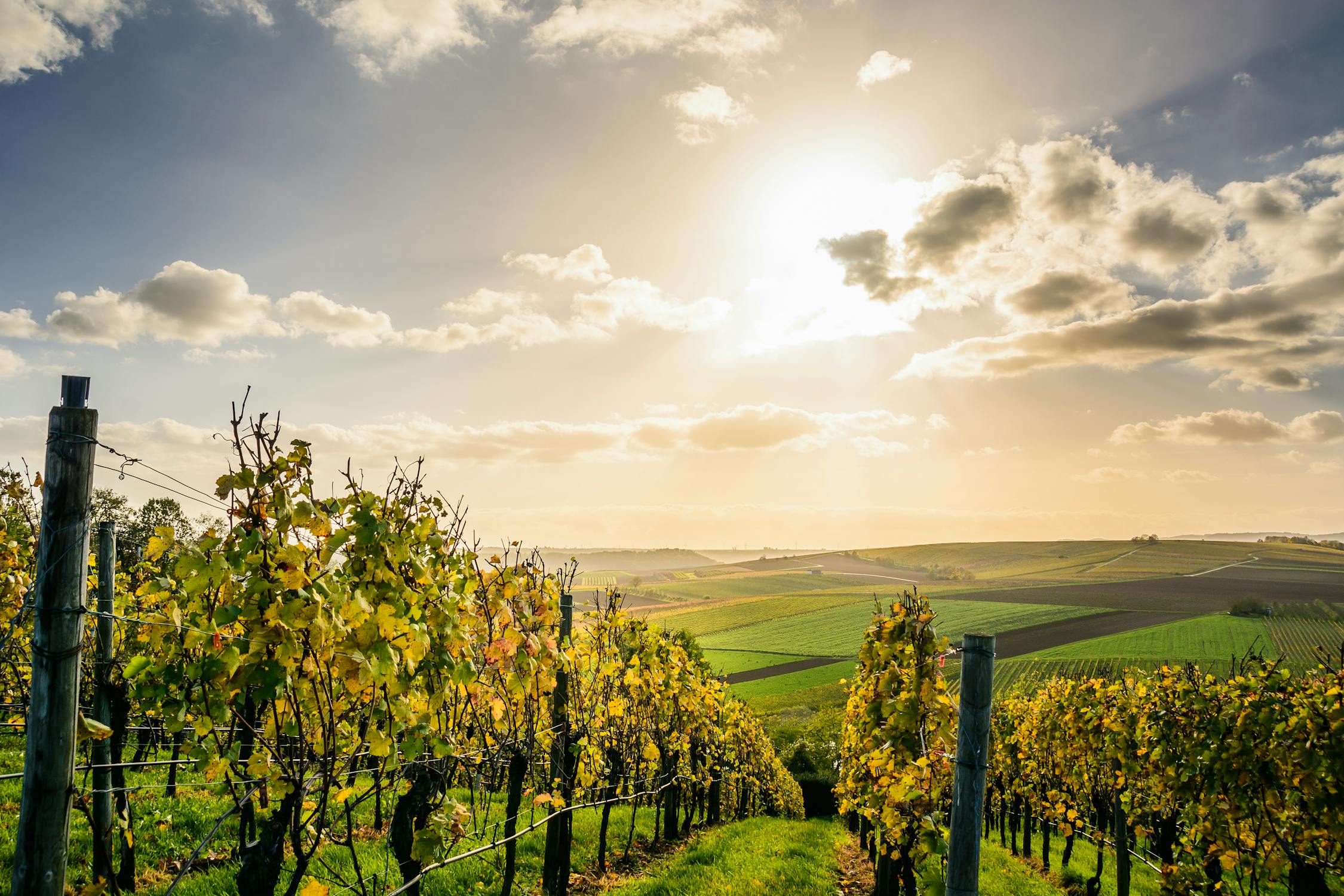
| "I am the vine, you are the branches." This is the only I am statement in John, which has a you are clause with it. |
© 2024 The Rev. Seth Olson
Holy One, let my words be your words and when my words are not your words, let your people be cunning enough to know the same. Amen.
Every Monday morning from 10 to 11 A.M. for almost three years of my life I sat in a gorgeous office. The walls were lined with bookshelves filled with volumes on Theology, Contemplative Prayer, Holy Scripture, Fishing, and Canoe Building. Gigantic peach, tan, and cream sandstone blocks lined the exterior of the office, and several picture windows provided views of the outside world—where students were walking to class. From where I sat, I gazed upon the dogwood and Japanese maple trees sitting outside—ever changing with the seasons. Inside the office, something else was changing.
The 10 o’clock Monday morning meetings were with my mentor—Sewanee’s University Chaplain the Rev. Tom Macfie. At the time, I was the university’s lay chaplain, so we talked about our shared work, and he guided me through conversations about discernment. While God had called me in many other times and places, it was there in that office that I felt God confirming my call to ordained ministry through the support of a guiding presence. Of course, this sort of careful listening can also reveal truths that I did not want to see.
Many Monday mornings, Tom and I spoke of our prayer practices. A trend emerged after about a year of working together. Every few weeks one of us mentioned that our daily prayer practices were going GREAT! It was not necessarily a boast, but it was not always humble either. Almost always the next week that person would have to admit that the same prayer practices had faltered. At first, neither Tom nor I thought much about it, but overtime an insight emerged.
Seeing this pattern—solid prayer time, humble bragging, and a resulting setback—we noticed in this theme God inviting us not to give up, but to go deeper, or perhaps better put, to be deeper. Today, Jesus tells us that every branch that bears fruit the Father prunes to make it bear more fruit. Our life with God, our prayer practices, and our walk of Faith possess both growth and pruning, so that we may bear more fruit. And yet, through the ups and downs of life what matters most is not success or failure, but instead abiding with God, being with God as God is with us.
This challenges us. We often think in terms of growth. Ponder for a moment your career, your knowledge base, or your retirement portfolio over the course of time. What does that ideally look like? It may appear as a line with an arrow pointing up into the future. Now, maybe this is how we envision growth happening, however most of life does not develop in this way. Why is that? Because that is not how we grow!
There’s a helpful concept from the Living Compass—a training that develops holistic wellness in the lives of individuals and congregations. This wisdom is the J-Curve. When we yearn to grow, often we do well at first, then we experience a setback, if we stick with it, usually we grow. This pattern largely takes the shape of a J. What about in our lives of prayer? I know for me this shape is mostly true when measured in time and intentionality. However, there’s a deeper truth here too.
God abides with us more intimately than we will ever perceive, know, or can even imagine. How can one track growing closer to the One who is closer to us than ourselves? At the same time, God exists more transcendently beyond us than we can fathom. Having a relationship with God who dwells in and beyond us will leave us baffled. This means that our relationship with the Divine does not track easily, like a linear graph, which means we cannot expect that relationship to grow exponentially.
During times when we presume that we’re responsible for our closeness with God, we often fail, as I learned during those meetings with Tom. When we come to church, take time to pray, give to God’s work in the world, and serve our neighbors, then we may think we get a gold star, like a child might for attending Sunday School. We mistakenly believe we are the reason our spiritual life is trending upward. The Book of Proverbs reminds us that pride goes before destruction. Even here though, there is good news: not in the pride, but in the pruning.
New fruit comes from God’s pruning—perhaps you learned this more clearly during the last four years. During difficult moments when we choose to live in the love of Christ, God stimulates growth. Our spiritual lives, our life in Christ, will not emulate a line graph, but rather the messiness of garden. There will be dirt. There will be sunny days. There will be downpours. There will be heat. There will be growth. There will be weeding. And all the while we will be tempted to figure out exactly where we are, like I tried to do during those sessions with Tom, but that is not what God calls us to do.
God doesn’t call us to do at all. What God calls us into is abiding. In each of the readings for today we discover this true task of our lives. It is not for us to quantify or score how well we are relating to God. Rather in each of these readings we hear the call to abide in God and God’s love, as God and God’s love abide in us.
The Ethiopian eunuch whom Philip baptized in Acts did not simply read Holy Scripture. He felt the Holy Spirit drawing him to abide in God more deeply. When he saw water, he yearned to dwell in the life of Christ, so Philip baptized him.
In this Psalm, the author desired to praise God in the great assembly. All are called to dwell in God. All are called to remember the Lord. Even those asleep in the earth shall bow down in worship. For all of our souls, like the author’s, shall live for God, as we abide in God.
The Letter from John, one which we often read at the Blessing and Celebration of a Marriage, reminds us that God is love and we are God’s beloveds. Our lives are to be solely focused on living out of this beloved/loving state. However, because of the association with marriage we may only focus on the emotion of love. John though tells us this love encompasses something even more tremendous than the feeling of love. God loved us first. God loves us fully. God loves us eternally. When we abide in this love, throughout life and especially during difficult times, we will emanate this same love to others.
John’s Gospel account seals this life-long call to live in the love of Christ with an analogy. Here we find the only “I am” statement in John that comes with a “you are” clause attached. “I am the vine, you are the branches.” We bear fruit not on our own, nor by our merit, nor by working harder, but by living together in Christ. While other bits of John’s Gospel account grab more attention, this challenge to abide in God resonates so powerfully to the Church of today. 63 times throughout his letters and his Gospel account this word abide appears. We would do well to proclaim this more often. Why?
We live in a world that obsesses over productivity or rather what we produce—not unlike what I was thinking at those Monday morning meetings. Our society tells us, it is up to you to have a good life. And sadly, the Church follows suit. It is up to me to earn my way into God’s grace, God’s love, and God’s heavenly kingdom. So, we hear things like you must go to church, pray every day, and avoid sin. We even hear that if you do not believe you will go to hell. Being a follower of Christ Jesus was not, is not, nor will it ever be about doing something to earn the love of God. God already loves you. God abides in you no matter what. You cannot hit a higher mark on this line graph. Instead, we are called to recognize what is already present.
God loved us first. Through the love of Christ—seen in his life, death, and resurrection—we observe the depth of God’s love for us. That is why we are so beloved. And, as we exist as God’s beloveds we are called to share this same life-giving love with others. It’s not about saying a certain prayer—it’s about reflecting what’s already there!
May we always remember that we are God’s beloved branches, connected to Christ our vine. When we face challenges, setbacks, and pruning may we recognize new growth, which will follow. And most of all, may we abide in Christ and reflect his life-giving love, which made us and makes us whole. Amen.
