Tuesday, October 31, 2017

Reformation and Transformation

What does The Very Hungry Caterpillar have to do with the 500th Anniversary of the Protestant Reformation?
I have been reading The Very Hungry Caterpillar to Teddy—my almost three-month-old son—over the last few weeks fairly regularly. If you have not been introduced to the children’s book written and illustrated by the great Eric Carle I commend it to you. Yes, even though you are not a little child you too might enjoy it. What most will remember about it is the cute little holes that run throughout the book as the caterpillar worms his way through various food items. However the story itself seems significant to me.

The plot chronicles the week-long journey of a caterpillar who eats more and more each day. Sunday through Friday provides an opportunity for the little creature to compound its appetite until on Saturday he overdoes it.

As the author put it, “On Saturday, he ate through one piece of chocolate cake, one ice-cream cone, one pickle, one slice of Swiss cheese, one slice of salami, one lollipop, one piece of cherry pie, one sausage, one cupcake, and one slice of watermelon.

“That night he had a stomach ache.”

On Sunday though the caterpillar eats a small meal and then comes a powerful transformation. For several weeks the caterpillar rests inside a cocoon before on the final page it is transformed into a beautiful butterfly. Some will point out how this does not conform to the actual life-cycle of a butterfly, but I’m less concerned about how this. To me this kids’ story has connections to today’s Gospel lesson and today Gospel lesson points us toward the Kingdom of God and on today of all days is that not where our focus is drawn?

You may not be aware of the significance of today, but 500 years ago Martin Luther the catalyst of the Continental Reformation nailed his 95 Theses to the front door of Wittenberg Castle church. What happened next? Years of struggle as the Body of Christ attempted to figure out the path to the Kingdom of God here on earth. Today, we seem to be in the midst of another big reformation. But what does all of this have to do with a caterpillar and what does this have to do with Gospel and what does this have to do with the Kingdom of God? Patience!

What is the Kingdom of God like? It is like a caterpillar who after a stomach ache and a chrysalis period becomes a beautiful butterfly. What is this butterfly like? Well, this butterfly is like a mustard seed, which seems to be a disregarded, tiny seed, but after some struggle grows into the greatest of all shrubs. What is the growth of this bush like? It is like yeast, which can be found just about anywhere—just ask some French chefs who find it in spider webs—and yet it helps to leaven all things. What is the leavening of a loaf like? It is like the Kingdom of God, which strikingly enough goes through great transformation—even during hard times—becomes great from something small, may be found almost anywhere, and all the while has the power to transform this world!

These parables—stories about the Kingdom of God—help me to have hope in something powerful happening even though I may not be able to see it now. I cannot understand how a butterfly comes from a caterpillar who eats too much. I don’t get the growth of a big shrub from a tiny seed. I cannot comprehend how someone figured out that yeast would help to leaven a loaf. Nor, do I get how a man 500 years ago nailing his thoughts on the door of a church would lead to one of the greatest shifts in the history of the Body of Christ. Yet, all of these are examples of how the Kingdom of God is hidden and unexpected while at the same time being ubiquitous and simple.

Maybe what is so powerful about all of these examples is that each one did not start with the final product apparent, nor was it possible for the transformation to happen in a vacuum. The caterpillar required food. The seed required soil, light, and water. The yeast required flour, water, kneading, and heat. The Kingdom of God likewise does not happen without the combination of multiple elements—a coming together of that which is here and easily visible with that which we cannot observe with our senses. The Kingdom of God happening here calls for a combination of our human gifts (as humble as they may be) with the overwhelming gifts of God. Martin Luther understood that when he pointed to the primacy of Holy Scripture and the belief that it is God who saves us not our own good works. He pointed with his own human abilities to the gifts of transformation that God makes real in Christ Jesus.

Today, as we look back 500 years we may feel as though the Body of Christ, the Church, exists at another big crossroad. A modern day period of reformation, if you will. We may be scared. We may not know what will happen next. We may worry as headlines read: The Church is Dying! However, we must have faith that the butterfly will emerge. We must trust that the shrub is inside the seed. We must know in our hopeful hearts that the loaf will be leavened by the yeast. We must remember that those who first followed Jesus did not know what would happen on Good Friday afternoon as they saw their Lord betrayed, beaten, and dying. And yet, in the end God’s love transformed that hopeless day into the sign, symbol, and way leading to God’s greatest triumph. We do not know how this will end, but as caterpillars, seeds, yeast, and Our Savior Christ show us the Kingdom of God is always being reformed, is always about transformation, and is always full of surprises.

Monday, October 30, 2017

#Blessed


What makes a saint #blessed?

This Wednesday we celebrate All Saints’ Day and on Sunday we will again commemorate this festive day with All Saints’ Sunday. If you are unfamiliar with this occasion, it is a time when we remember all those saints who may not have a particular day for us to otherwise think about their witness of the Good News of Christ Jesus. Strangely enough the day falls right after Halloween—that spooky time when we think about unrestful souls—and right before All Souls’ Day—that hallowed time when we recall all those who have died, especially in the last year. What strikes me about this three day period is that the church attempts to intentionally lift the veil between the living and the dead as we put ourselves in a thin and holy place of remembrance. We might wonder though what these days really signify? And, more importantly how do these times point to the Good News of Jesus? This makes me think in what ways do the lives of those around us help us to know the transforming power of God’s love?

Often when perplexed as to the deeper meaning of a Church-wide celebration I turn to the Holy Scripture for that particular occasion. When we are in Year A of the Lectionary we hear primarily from the Gospel according to Matthew. For All Saints’ Day/Sunday that means we hear some of Jesus’ powerful words from the Sermon on the Mount. In particular we hear the Beatitudes, which are those markings of blessing that we may or may not actually see as being a good thing. 

Here’s the Gospel lesson for Wednesday/Sunday (Matthew 5:1-12):
“When Jesus saw the crowds, he went up the mountain; and after he sat down, his disciples came to him. Then he began to speak, and taught them, saying:
‘Blessed are the poor in spirit, for theirs is the kingdom of heaven. 
‘Blessed are those who mourn, for they will be comforted. 
‘Blessed are the meek, for they will inherit the earth. 
‘Blessed are those who hunger and thirst for righteousness, for they will be filled. 
‘Blessed are the merciful, for they will receive mercy. 
‘Blessed are the pure in heart, for they will see God. 
‘Blessed are the peacemakers, for they will be called children of God.
‘Blessed are those who are persecuted for righteousness' sake, for theirs is the kingdom of heaven. 
‘Blessed are you when people revile you and persecute you and utter all kinds of evil against you falsely on my account. Rejoice and be glad, for your reward is great in heaven, for in the same way they persecuted the prophets who were before you.’”

The refrain of blessing stands out to me because these blessings do actually not appear to be blessings—at least to most of us in this world. Being poor (in spirit), being sad, being meek, being hungry, being merciful, being pure in heart, being a peacemaker, and being persecuted do not sound like the recipe for modern day success. Sure some of these things seem nice, but on the whole they sound like the undesirable half of either/or choices. Would you not prefer to be rich, happy, bold, full, and cutthroat (at least in business or sports). And while no one wants to be merciless, impure, or a bully, if it leads to being #blessed isn’t it all worth it in the end? Well, the ways of this world and the ways of Jesus often run at odds of one another, don’t they?

This week as I prepare to preach, I am thinking about the lives of those saints from my own life who will never be commemorated by the Church and how they might be the key to understanding these odd statements about blessing. Those souls who have recently passed through the veil, which separates this mortal world and the immortal realm of God, may have a clearer vision of what truly matters than I do. So, “What does blessing and being blessed truly look like?” 

The great cloud of witnesses around us and even including us see through the veil of this world. Saints are able to point with their lives to true blessing—i.e. what Jesus speaks in the Beatitudes. They communicate with their lives the Good News of God’s transforming love. They become for us signposts on our lives’ journeys, so that we might know more fully life in Christ. It is not about spiritual achievement or earning some wreath of glory rather, it is about living into really being blessed.


In all of this I think being blessed by God looks different than being blessed with riches, privilege, power, comfort, or fame. Saints are blessed, but they are blessed in knowing Jesus. They are blessed by being transformed through God’s love. They are blessed in sharing the Good News. In this way, I think I know a lot of saints and a lot of people who are #blessed.

Wednesday, October 25, 2017

Who’s Your Last Resort?

St. Jude is known as the saint of lost causes, but who do you turn to when your back is against the wall?

Who do you turn to? In a moment of desperation or despair who is it that you trust? Do you have a go-to friend? For many of us it is probably our spouse that we call upon. Perhaps we will contact a parent or a best friend that knows us better than anyone else. What happens though when all of your trusted go-to friends or family members are unable to fix your problem? Who do you turn to when it is your last resort?

Today is the Feast Day of Saints Simon and Jude. Allegedly these two Apostles traveled with the Good News of Jesus all the way to Persia. In the process of taking the Gospel to the ends of the earth they were martyred, or at least that’s what legend holds. There exists little evidence of this, but who would have been around to record what happened to them if they were killed on a missionary journey in a foreign land? I wonder who they turned to as their last resort? Before continuing to wonder about that it might be nice to know a little bit about these two, but sadly the Church does not know much of their lives.

Simon does not appear often in the New Testament. He was called the Zealot and some wonder if that meant he was actually a part of the Jewish movement by that name or if he was just animated. Jude appeared more often than Simon. He was even present at the Last Supper. And, though not all that popular himself he has a connection to my question from earlier: Who do you turn to when it is your last resort?

Jude often gets called the patron saint of lost causes or the saint of last resort. Why? Well, we in the Church are not completely sure, but many believe this has to do with his name being so similar to Judas Iscariot’s name—the man who betrayed Jesus into the hands of people who had him killed. Because of the similarity in names we have changed Jude’s name in English to what we currently call him from what he would have actually been called back then… Judas. If you think it’s no big deal and that we ought not to have made this shift, just think of all the Judases you know. This makes a little more sense in thinking why Judas/Jude would be considered the saint of last resort. Let’s think about this a little more deeply though.

Some people are staunchly opposed to praying to a particular saint. They find that to be dangerous in a number of ways. For one, it feels like trying to call in a favor to a particular friend you are connected to at town hall or the state capitol. Also, it may cause one to wonder are we praying to a saint instead of to God? However, James Kiefer asks a cutting question as he wrote about the saints whom we celebrate today: is asking a saint to help you out much different than asking a friend to pray for you in a time of need?[1] In the end it all depends on your intention.

The question falls back upon two things for me. First, are we following the commandment that we heard Jesus give in today’s Gospel lesson? Are we loving one another? Are we asking a friend or a saint for help for the sake of self-giving love or is it for our own benefit? A prayer who says, "Saint Jude be present with those who are at their wits end by calling me into the loving service of Christ" is quite a different than someone who says, "Saint Jude this is my last $5 help me hit the lotto!" Second, what do we really think is happening here?

What is prayer in the first place? God knows our desires before we state them. As Christians we believe that Jesus is that direct mediator and advocate of the Father, but does that mean we do not seek out the inspiration or help of those who walk alongside us in this journey of Faith past, present, and yet to come? Do we not want to dwell in unity with all those beings who live together in the love of God? I believe we need all the help we can muster so to live into the love God gives us and to share it with all whom we meet. So to pray that saints show us the path to Jesus who unites us with the Father makes way more sense than merely praying to a saint that we like because they have an inside track and we don't.

In conclusion, political connections do not exist in the life of God. Praying to a saint, instead of to God distances ourselves from the intimate, transcendent One. We can though catch the gleam of Christ’s light reflecting off the lives of the many saints throughout the years. Our hope is to share that light with everyone. Our hope is to even reflect that light off of our own lives and into the lives of others. Of course, we need others to help us on the way to the eternal nearness of God. So whoever it is that you turn to as your last resort, may your first, next, and only resort truly lead you to Jesus who is the source of the light that shines in the lives of saints like Simon and Jude.


[1] Kiefer, James. "Simon and Jude." Mission of Saint Clare. October 25, 2017. http://www.satucket.com/lectionary/Simon&Jude.htm (accessed October 25, 2017).

Tuesday, October 17, 2017

Let’s Face It: Everything Belongs To God

George using me as a climbing wall.
I have a really sweet memory from a couple years ago when I went with my mom, my sister, her husband, and three kids to Disney World. One of my twin nephews George who was about two and a half at the time started crawling all over me in Epcot. He walked his feet up me like he was ascending a sheer rock face. I felt like I had very little control over the situation, so when he calmed down long enough for us to talk for a minute I thought of it as a small miracle. In that moment he said—loudly enough for his brother to hear—“My Seff.” (translation: My Seth)

Mine.

There are times in life when it feels very important to say to others that something is "mine!" Sure, when we are toddlers we may very well fight over the same action figure or doll in a room full of other toys simply because we want to claim it as our own. Yes, on the bus to school or a field trip “my seat” links to one’s social status. Of course, in the larger world (and even the universe) we want to either individually or collectively mark something as our own by putting our name on it or sticking our flag in it. While we believe we are more advanced than dogs who mark their territory, somehow I look around and realize we may not be as enlightened as we hope we are. Of course, there are distinctions to be made here.

Sometimes when we say mine or ours we may very well be connecting to a larger sense of unity between others and ourselves. Collective excitement about a group accomplishment is one thing; however, there is another side to this coin. Blindly following the crowd to claim something or worse someone as “ours,” or blindly self-promoting one’s brand above all else stands out as at best vanity writ large and at worst destruction of the very ties that bind us together as human beings and fellow children of God. Saying “mine” as a young child is a natural part of human development, but grasping mindlessly at people, places, and things while claiming “mine” as we mature is what leads to teenage girls being abducted, women being sexually assaulted, assault weapons being stockpiled, troops being deployed, and the myth of scarcity being perpetuated.

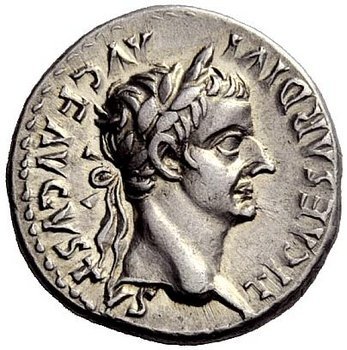
Jesus said, “Whose head is this [on the denarius], and whose title?” They answered, “The emperor’s.” Then he said to them, “Give therefore to the emperor the things that are the emperor’s, and to God the things that are God’s” (Matthew 22:20-21).

At first glance, Jesus appears to condone the selfish behavior of humanity to carve our names on the underside of everything, as we try to claim it for our own. And yet, in this coming Sunday’s Gospel lesson Jesus responds to the Pharisees’ and Herodians’ trap with his own. The trick is that even though the emperor’s face was on the coin—which was a graven image made to depict the leader of occupying Rome who alleged to be a demi-god himself—the trick is that when we really unpack what Jesus said we discover the good news that God is the one who possesses all things and not the emperor. The difficult news in this good news is that like the emperor we too are only caretakers for that which truly belongs to God—and yes, this even includes our own lives.

What happens when we wake up to the truth that our lives are not our own? How does life change when we recognize that we are merely God's stewards as we take care of our children, grandchildren, and great-grandchildren? Why would we keep warring if we recognize that everything is a gift from God? Is it possible to continue the destruction of this planet, the abuse of one another, or the belief that we can own another human being when we come face-to-face with the truth that everything and everyone belongs to God?


On the surface this week’s Gospel lesson seems like Jesus sidestepping the trap of those who plotted against him, but in reality this passage envelopes us in the truth of our reality. God has given us everything. How will we respond to God’s graciousness? By putting our face, our name, or our agenda on everything we lay our greedy hands on? By claiming that we have earned everything in our lives by our own merit or hard work? By denying that others have been given the same gifts by God in hopes that we might learn to share everything just as God has shared this life with us? Or, by recognizing that God’s great hope for us is to be good stewards as we share the grace and gifts we have been given? For let’s face it, everything belongs to God. 

Sunday, October 15, 2017

Don't Miss Your Invitation

In less than one month I will travel to Alexandria, VA. At Christ Church in the old part of town I will don a nice new tuxedo, put on patent leather shoes, and tie up my bowtie to take part in one of my best friend’s weddings. Since that couple got engaged I have been excitedly looking forward to that day. “Why?” you ask. I’ll tell you why. Because I love weddings and I love a good party!

Who can withstand the joy of a beautiful ceremony? Who doesn’t love dining on delicious food in the company of many friends? Who can resist getting out onto the dance floor? I mean there will even be cake!

What happens though when things do not go as planned? Almost every wedding I have attended has that one moment when something goes wrong, and usually that is the thing everyone charmingly remembers. But…what if it’s something big? What if no one were to show up? What if people burned the invitations instead? What would happen if say a hurricane interrupted the wedding making it impossible for the celebration to go on? Well, I pray that no storm will befall my friends’ wedding, but back at the beginning of September that very thing happened in Houston.

September 2nd was not what Shelley and Chris Holland had hoped it would be. The plans of the last six months and all the details big and small surrounding their dream wedding were swept away in the destruction of Hurricane Harvey. So what did they do? Did they decide that it would be cancelled? Since many guests couldn’t come shouldn’t they just call the whole thing off? Even with the catering, the cake, the chapel, and the reception venue gone the couple decided that the wedding would go on just maybe not as planned.

The congregation, wedding planner, and pastor at the Holland’s church helped this couple to have—not their dream wedding—but something else, something far more profound. Even though Pastor Jorge Cardenas’ own home and the Church on the Rock in Katy, TX were flooded, he helped them find other accommodations. Even with so much destruction all around them—the people of that church found a way to celebrate!

The pastor summed up the experience to a local TV station, “The reality is that we all go through a crisis of our faith in moments like this... The church and my house, all gone and then I said, ‘Wait a minute, why not me?’ I can take it because I have faith.” The bride marveled, “WOW! We are so grateful to these sweet people...  Such a testimony of God's faithfulness! Harvey we WON!”[1] They didn’t have to respond in this way.

The pastor could have said, “Sorry, I just can’t be there. My house is ruined. My life is a washed up pile of rubble. Try back in a month.” The bride could have just said, “I don’t want to participate unless it is just perfect.” What happens when we are extended an invitation to be part of the celebration, but it’s not exactly what we think it will be or dream it will be? What happens when we let life get in the way instead of accepting an invitation? What if that invitation is extended by a king?

We don’t have the same affinity for royalty as in the past. Still if you got an invite to a Royal Wedding wouldn’t you be there? If we received an invitation from God to be part of the celebration wouldn’t we show up? Of course we would, so why is it that we don’t?

The parable Jesus tells in today’s Gospel lesson stands out as exceedingly difficult. Often it gets hijacked and turned into something terribly anti-Semitic. That bad interpretation goes: the invited guests are the Chosen People of Israel, they don’t show up and are murderous instead, and Christians are the ones who do show up! Honestly I think this reading of the text makes Jesus, a righteous Jew himself, weep. For not only does this make us supposed followers of Jesus smug, arrogant, and even violent at times, it also is a bad interpretation that prevents us from seeing what God is truly speaking to us.

This story is about God’s invitation to us—all of us, at all times and in all places. So often though, we ignore the call of God to come join in the festivities. We are too busy with work, with our business, with the worries of life—with bills, doctor’s appointments, the latest political drama, being the right kind of spouse/parent/grandparent/friend/person, and proving how right we are and how wrong everyone else is—that we never see the invitation with our name on it.

There is however an invitation. You—yes you—are invited to celebrate God’s Son’s wedding. It’s happening right here, right now, exactly where you are. Jesus came to start something—to inaugurate a grand celebration—that binds heaven to earth and earth to heaven. We recall that mystical start of the festivities every Sunday when we gather around God’s Table to share in a meal that stretches across all time and space. There we discover that Christ is dwelling within us and we in Him. But, this invitation does not only get extended to you and me here on Sundays—it’s happening in all times and in all places.

8 o’clock: We say in Eucharistic Prayer during this service, “It is very meet, right, and our bounden duty, that we should at all times, and in all places, give thanks unto thee, O Lord, holy Father, almighty, everlasting God” (BCP, p. 333).

10:30: We say in the Eucharistic Prayer during this service, “It is right, and a good and joyful thing, always and everywhere to give thanks to you, Father Almighty, Creator of heaven and earth” (BCP, p. 361).

When we give thanks it opens us up to see the festivities all around us. We say thank you to God and then, our world changes because in being grateful we are able to see that we are already involved not only in the cares and occupations of this world, but also in the life of God and the Kingdom of God happening here and now.

Once we are grateful and we do notice that God is inviting us to celebrate with Him, how do we respond? We may worry because we see at the end of today’s parable one was kicked out for not wearing the right clothes. This is not an episode of “What Not To Wear.” This is Jesus telling us something very important. Once we accept the invitation to be part of life with God, something is required of us.

We must allow that life to transform us. It is not enough to let God in just a little bit. It is not enough to allow God to have part of our lives. It is not enough for God to transform us only how we want to be transformed. Life in the big party that is the way of Christ will profoundly change us! To be in the party is to allow it to transform us. This is not about something we must achieve on our own, rather we must let God’s transforming love dress us in the finest clothes for the festivities!

You have been invited. You have been invited to be part of how Jesus is binding together heaven and earth, earth and heaven. You have been invited to the greatest feast of all time. How will you participate? How will you be transformed by God? How will you let God celebrate with you and clothe you in His splendor? Because I bet like me you too love a good party.


x
[1] Aiello, McKenna. This Couple Took Their Wedding Photos in the Aftermath of Hurricane Harvey's Destruction. September 6, 2017. http://www.eonline.com/news/878245/this-couple-took-their-wedding-photos-in-the-aftermath-of-hurricane-harvey-s-destruction (accessed October 12, 2017).

Thursday, October 12, 2017

System Fail: On Golden Calves, Sexual Harassment Lawsuits, and World Cup Exits

When a system fails it is almost too easy to scapegoat one person.
If you have not read Exodus 32, you should. I don’t use the s-word often because it sounds awfully preachy (and what preacher wants to sound preachy?), but I do here because I believe it is that important. This is not because it will take you to some mystical height, nor because I think it is the secret to life, but rather because Exodus 32 is a classic case of what happens when a system fails. And, whether you know it or not, the systems that involve you—your family, your business, and even your church—could just as easily crumble. I mean it doesn’t take very long to look around and see systems failing as CEOs are fired, marriages fall apart, sexual harassment doesn't get reported, or soccer teams miss the World Cup (cough… cough… U.S. Men’s National Team…cough…cough). So, what can Exodus 32 teach us about systems failing? I’m so glad you asked.

First, let’s go over what happened in it. Moses delayed from coming down the mountain (singing: he’ll be coming down the mountain but not right now…), so the people got restless. The people turned to Aaron (the senior V.P. of Promised Land LLC) and said, “We don’t need that Moses guy. Why don’t you make us a new god to worship? That other one may have brought us safely out of Egypt, but we want something shiny and new and gold and preferably made by Apple!” (Okay, they didn't say that last part.) So Aaron caved under the pressure and he helped the people make a statue of a golden calf that they worshiped at the altar that Aaron subsequently built.

Well, God saw what happened and he was not all that happy. God told Moses to get to stepping down the mountain to deal with “your people”—not God’s people mind you. This is like when a wife says to her husband “your son”—who is really the son of both of them—is misbehaving. So after God raged and Moses convinced God to calm down Moses went down the mountain where Moses himself started to rage.

The people had so disappointed Moses that he found it hard not to show his true feelings. Moses saw the golden calf, people dancing and worshiping it, so he threw down the tablets—not iPads, but stone tablets with God's commandments written on them. This was just the start. Soon he took the golden calf and made it into a powdery drink and forced the Israelites to drink it—and you think your protein powder tastes bad! Now, here’s where it gets good and where we can see some clear parallels to all sorts of other system failures.

When Moses confronted Aaron to figure out what had happened the scapegoating and finger-pointing got really interesting. Aaron blamed the people who made him do it—“You know the people, that they are bent on evil.” They just so happened to give him all their gold and he threw it into the fire and out came a golden calf. This sounds like the high school kid who throws a massive party at his family’s home while his parents are away and when they return he says his friends made him do it...riiiight! Moses eventually goes scorched earth on the people employing the Levites to kill 3,000 Israelites who had turned to worship the golden calf. What is striking and tragic is that this did not have to happen in this way.

Multiple people and events all conspired to contribute to the failing of this system. Usually we want to point out the “scapegoat”—or to use a fancy Systems Theory word “identified patient”—that is the source of the problem within a family, a workplace, or a church. It was his problem or her problem or that issue was the source of our stress. Then, we fire them or get rid of the problem thinking everything will be all better. Think of when the failing team fires its coach. Soon we discover though that while getting rid of that person or problem momentarily “fixes” things soon someone or something else will swoop in to fill the void. The new coach wins a couple games, but the same problems may very well exist within the system. In the case of Exodus 32 multiple failings conspired to result in the idol worship and subsequent murderous rampage.

Aaron, Moses, the people, and even God had a hand in this tumultuous set of events. We quickly can see that Aaron lied about what happened trying to blame the people for his role in the idol making. The people though were trying to test out the system to see if Aaron and Moses were on the same page. They obviously were not. Moses though had a hand in the problem. He had been the intermediary between the Israelites and God for so long that they seemed lost without him—like when a church struggles to replace the beloved former rector who had been there for 20 years. God though seemingly does not step in, but distances himself from the problem when he won’t even say they are his people, but Moses’ people. So what do we learn from all this?

First, transitions in systems are really hard. They need to be handled with much care. When someone gets fired because he or she is the problem—watch out! When someone who is beloved leaves or retires—watch out! When secrets and rumors start piling up—watch out! When someone goes on sabbatical leaving a V.P. or associate in charge—watch out! These moments are hard and the system will test its limitations to see the strength of its leaders in particular. The more that leaders can share responsibilities within a system and empower the whole to function normally even when he or she is missing the more prepared that system will be for change.

Second, the more that leadership is open, transparent, peaceful, and unified the more health exists within the system. If Aaron had simply told the people that they had one God and that God delivered them from Egypt and was leading them to the Promised Land, chances are none of this would have happened. Instead he did something silly and covered up what happened with a lie. Sexual harassment, fraud, substance abuse, etc. cannot happen without a cover-up. Transparency is vastly important to the health of a system, as is leadership being on the same page about whatever issue comes up. Think of the kid who begs one parent, then the other for ice cream to see if one will give into her request.

Finally, scapegoating never solves the real problem. While there is always more to learn from stories like Exodus 32, this might be the most important lesson. In writing that statement I cannot help but think of the example of Jesus. He came to flip the scapegoating, sacrificial nature of religion on its head. Instead of thinking that we have to have someone to blame for whatever problem is at hand, Jesus willingly took on the scapegoat role to transform it and take away its ability to “fix” things. When Jesus spoke words of forgiveness while he was hanging from a torture device he showed the fallacy of this way of doing things. When God resurrected Jesus the scapegoat paradigm was deflated, as we see that it was not the scapegoat that was broken but the system itself. And yet, we still keep on trying to send someone out like the poor goats who had all of a community’s sins attached to it.

Systems are tough. They often veer into unhealthy behavior without conscious thought. The role of leaders in the 21st Century has become so complicated because we live in a world of gotcha moments that are all about finding someone to blame for a particular problem. The successful systems now, like in ages past, will be able to navigate transitions without scapegoating individuals. They will also likely avoid making a golden calf to put in the place of God, blame others for doing so, and end up murdering many people as the solution. All of this to say, get it together U.S. Men's Soccer!

Tuesday, October 10, 2017

Good, Better, Best

Who are you: Martha or Mary? Is one truly the better path to follow?
So who are you? Are you Martha? Are you Mary? When confronted with this passage from Luke’s Tenth Chapter often the impulse readily available drives me to choose who I am most resembling at the moment.

Is there a lot of work on my plate? Have I been serving others recently? Did I host any dinner parties this week? Then, presumably I am Martha.

Have I been spending time in quiet? Did I stop to say my prayers before running around like a chicken with my head cut off? Am I living my life with my relationship with Jesus as the core? Then, presumably I am Mary.

We would all like to be Mary, right? No one tries to be the priest or the Levite who walks right by the beat-up-traveler—we all want to be the Good Samaritan. And, that story immediately precedes this one. We all want to be the one that stops to care for the broken-down-traveler, we all want to be the one who sits at the bedside of a sick, beloved friend. And yet, I think that one word in our current translation makes it almost impossible to see any merit in the other way—Martha’s way. Better gets in the way of a fuller understanding of what Jesus really said to these sisters.

Voltaire, the French philosopher who often attacked the Church, once said, “Better is the enemy of Good.” This seems so obvious, but we spend our lives pursuing better that we do not even count the blessings that we have around us. We charge ahead chasing after something better. One day we may very well wake up to realize that we have sacrificed the pursuit of goodness for the pursuit of betterment. Why do we do this and why is this so dangerous and what does this have to do with Martha and Mary? The answer lies in what Jesus really said.

When Martha came to complain to Jesus the original language tells us that his response went something like this: “Martha, Martha thou art careful and troubled about many things: But one thing is needful: and Mary hath chosen that good part, which shall not be taken away from her.” What a difference! In this translation Jesus does not stand as a judge who is declaring that Mary is the better sister, instead he is clearly pointing to the truth we need only one thing: to be with God.

Mary was not proclaimed the better sister, she had stumbled upon the truth of our reality and the purpose of our being. She knew that being with Jesus was the way. Instead of trying to do more or be better or even to be good, Mary simply stopped. As we live in a world that gets more and more obsessed with more and more, we would do well to move from ways in which we compare ourselves one to another. In fact, it would be helpful if we stopped inserting the word better into Jesus’ mouth when he speaks to these two sisters. As we have been exploring in our Wednesday night series on the Prodigal Son, the Father in that story, like Jesus here, was not playing favorites. They both just wanted all to gather together in joy instead of competition.

As we live out lives of better though we find ways to one up one another all the time. On some level I believe we do this unconsciously. We have it programmed into us from the events of our rearing. The time when a parent, a teacher, or someone at church says, “You did great” or “That needs to be better” or “Why can’t you be more like her?” starts something in us that is hard to stop. God though yearns for us to live in his wide-open embrace that extends to everyone regardless of how much more or how much less we do than others. This is the great fallacy of better—that it actually exists and that it will somehow make you happier than you can be at this very moment.

Jesus taught that there is only one way: it is the good way. That way leads us to stop the warring, wrangling, and jostling for the prime spot. That way does not ask of us anything in return. That way simply calls us to sit at Jesus’ feet and listen, to rest in the embrace of Our Heavenly Father. This is not the better way it is the best way for it is God’s way and truly it is the only way.